John Le Carre
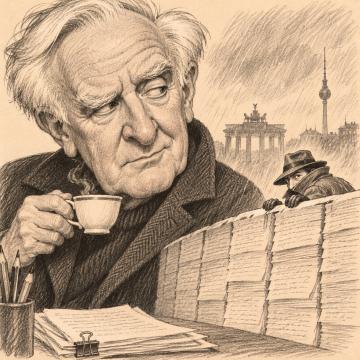
John le Carré (Poole, 1931–2020) could make an office conversation more suspenseful than a chase. In his spy novels, much depends on who gets to read a file, who is left out of a conversation and why a colleague suddenly cannot remember something. Behind the pen name was David John Moore Cornwell, who studied in Bern and Oxford, taught at Eton and worked for the British intelligence services MI5 and MI6.
He published his first novel, Call for the Dead (1961), while still in the service. It introduces George Smiley, an unassuming intelligence officer whose ability to listen and wait is one of his greatest assets. The Spy Who Came in from the Cold (1963) made le Carré’s international reputation. Veteran agent Alec Leamas accepts another assignment in a divided Europe and gradually discovers how little he knows about his own service’s plan.
In Tinker Tailor Soldier Spy (1974), Smiley comes out of retirement to find a Soviet mole at the top of British intelligence. He has to listen again to people he worked with for years and reconsider events he thought he understood. With The Honourable Schoolboy (1977) and Smiley’s People (1979), the book forms a trilogy about his contest with the Soviet intelligence officer Karla. In A Perfect Spy (1986), questions of loyalty reach further back, to a childhood spent with a con man for a father.
After the Cold War, le Carré turned to other forms of international power. The Night Manager (1993) centres on the arms trade. In The Constant Gardener (2001), a diplomat investigates his wife’s murder and comes up against the interests of the pharmaceutical industry. In both novels, the investigation shows how easily responsibility can disappear among people who insist they are only doing their jobs.
His memoir The Pigeon Tunnel (2016) revisits encounters and experiences that fed his fiction. In A Legacy of Spies (2017), a witness must justify decisions from Alec Leamas’s time to a new generation. The posthumously published Silverview (2021) returns to a question that runs through le Carré’s work from his first book: where does our loyalty lie when duty to the service and duty to other people pull us apart?
Titles in our offer
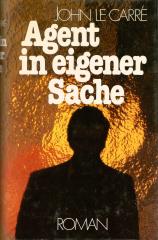
Agent in eigener Sache
Magnus Pym, a successful British intelligence officer and double agent, disappears after his father's funeral. In hiding, he writes a memoir about a life shaped by a deceitful father, lies, and betrayal. Le Carré's most autobiographical novel.

Izdajnik po našem ukusu
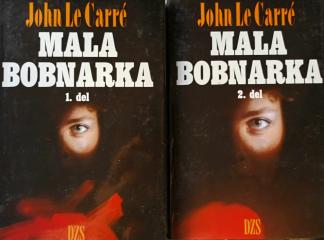
Mala bobnarka 1-2.


Najtraženiji čovjek
Kad se izgladnjeli mladi Čečen pod okriljem noći ušulja u Hamburg i potraži utočište kod obitelji turskih useljenika, uza se nosi neočekivano mnogo novca, a na sebi tragove mučenja.
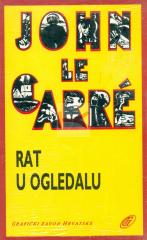
Rat u ogledalu
John le Carré's fourth spy novel, which depicts the intelligence struggle during the Cold War in an ironic and pessimistic way. The novel deconstructs the romantic image of secret agents by showing the decay and illusions of the old British intelligence g