Gustav Krklec
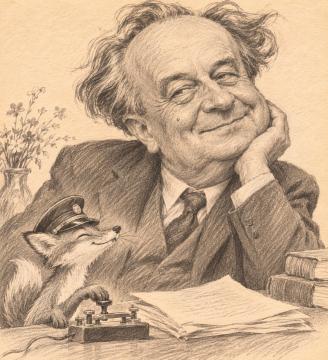
Sometimes a fable needs only one animal and a few well-measured lines. Gustav Krklec (1899–1977) showed this in Telegrafske basne (Telegraphic Fables, 1952), where animals are quick to give away human weaknesses. The same economy marks his lyric poetry. In a few lines he can evoke the pleasure of a day in the countryside, then change the mood of the whole poem with a single turn.
Krklec was born in Udbinja near Karlovac and spent his childhood in the Croatian Zagorje region. He began studying agriculture in Vienna but soon returned to Zagreb, where in 1919 he founded the journal Juriš with Antun Branko Šimić and Niko Milićević. He briefly assisted Karel Čapek in Prague, then spent years in Belgrade, where he worked as an editor at Nolit. After the Second World War he returned to Zagreb. He served as president of Matica hrvatska and died in Zagreb.
His early collections Lirika (1919) and Srebrna cesta (1921) show the influence of Expressionism. In later collections such as Ljubav ptica (1926) and San pod brezom, he relies more often on traditional forms. Clear phrasing and a feel for rhythm give his poems a lightness even when they speak of loneliness or unease. The children’s poems collected in books such as Zvonce o repu (1954) and Majmun i naočale (1967) show how well that lightness lends itself to humour.
Krklec also wrote fiction, literary criticism and newspaper columns, and translated from German, Russian, Czech and Slovenian. Alongside the novel Beskućnici (1921), his works include Pisma Martina Lipnjaka iz provincije (1956) and Noćno iverje (1960). In his lyric poetry, a brief scene can hold a reader in a particular mood. In the fables, a few lines are enough to set up the joke and leave the reader to recognise whom it fits.
Titles in our offer
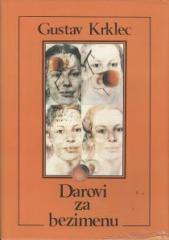
Darovi za bezimenu
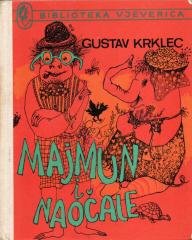
Majmun i naočale: Rukovet za velike i male
Gustav Krklec was a versatile children's writer. The book you are currently looking at contains a large oeuvre of his works. In it you can find his short stories, conversations, fables, ballads and many more different poems.
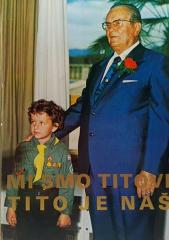
Mi smo Titovi, Tito je naš
The collection "We Are Tito’s, Tito Is Ours" brings together literary texts by Gustav Krklec, Ratko Zvrko, Jovan Popović, and Darko Stuparić, dedicated to Josip Broz Tito, the anti-fascist struggle, and togetherness.

San ljetne noći (izbor iz poezije)
If you are interested in adventure, magic and love, I recommend that you explore this work and discover more of its poetic virtue!
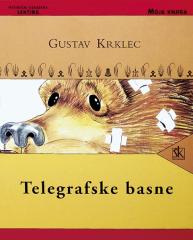
Telegrafske basne
Among Krklec's children's poems, Telegraphic Fables stand out because with them he introduced a completely new form to Croatian children's poetry.

Tri poeme
The three poems were published as a jubilee edition to commemorate the 50th anniversary of life and the 30th anniversary of literary work. For her, he received an award from the NRH Cultural Council. The note about the writer was written by Marijan Matkov
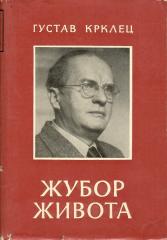
Žubor života: izabrane pjesme 1919–1954.
A collection of selected lyrics by Gustav Krklec, spanning more than three decades of creativity – from the early expressionist phase to post-war meditative-reflective poems about life, transience, love, and the shadows of war.