Hermann Hesse

Hermann Hesse (1877–1962)
Hermann Hesse, a German-Swiss writer, poet, essayist, and painter, was born on July 2, 1877, in Calw, Germany, and died on August 9, 1962, in Montagnola, Switzerland. He is one of the most significant European writers of the 20th century and a recipient of the Nobel Prize in Literature in 1946.
He grew up in a religious family shaped by the Protestant tradition and an interest in Eastern cultures. After discontinuing his theological studies, he worked as a bookseller before dedicating himself to writing. From 1919 onwards, he lived in the Swiss canton of Ticino, where many of his most famous works were created. He acquired Swiss citizenship in 1924.
He achieved literary acclaim with the novel Peter Camenzind (1904), which already featured his enduring preoccupations: the relationship between the individual and society, nature, art, and the search for an authentic life. This was followed by the novels Beneath the Wheel (1906), Gertrude (1910), and Rosshalde (1914). The novel Demian (1919) marked a shift toward the psychological exploration of personality, influenced by psychoanalysis and the philosophy of individualism.
In the novel Siddhartha (1922), Hesse explores Eastern spirituality and the path to self-discovery, while Steppenwolf (1927) addresses the inner duality of modern man. The novel Narcissus and Goldmund (1930) contrasts the spiritual and sensual principles of life, and The Glass Bead Game (1943)—his final major novel—presents a philosophical synthesis of reflections on culture, knowledge, and individual responsibility.
He also wrote poetry, short stories, travelogues, and essays, and maintained an extensive correspondence. His body of work is permeated by humanism, pacifism, symbolism, and a dialogue between Western philosophy and Eastern thought. Hesse’s works—which were particularly popular among young people during the 1960s—remain essential reading on the themes of freedom, identity, and spiritual maturation.
Titles in our offer

Demijan
The novel follows the coming-of-age of Emil Sinclair, who, with the help of his mysterious friend Demian, leaves the seemingly safe world of childhood and embarks on a journey of self-discovery, embracing his own dark side.
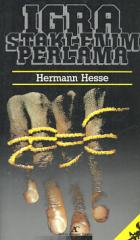
Igra staklenim perlama
The novel "The Glass Bead Game", published in 1943, is Hermann Hesse's greatest, almost life-long work, which he wrote for almost 12 years.
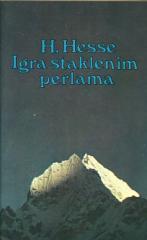
Igra staklenim perlama
Filozofski roman smešten u fiktivnu budućnost, u provinciji Kastalija, gde intelektualna elita neguje duhovnu disciplinu poznatu kao Igra staklenih perli. Roman prati život Jozefa Knehta, koji od učenika postaje Magistar igre, vrhovni učitelj Igre.
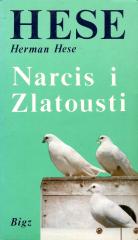
Narcis i Zlatousti
U romanu „Narcis i Zlatoust“, Herman Hese prati dva prijatelja: asketskog monaha Narcisa i umetnički nemirnog Zlatousta, koji tragaju za smislom života kroz lutanja, ljubav i patnju.

Narziß und Goldmund
U romanu „Narcis i Zlatoust“, Herman Hese prati dva prijatelja: asketskog monaha Narcisa i umetnički nemirnog Zlatousta, koji tragaju za smislom života kroz lutanja, ljubav i patnju.
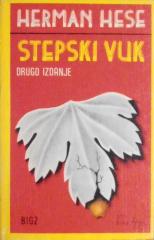
Stepski vuk
Roman prati Harija Halera, usamljenog intelektualca rastrzanog između ljudske težnje ka duhovnosti i divlje, životinjske prirode „stepskog vuka”. Kroz krizu identiteta, on traga za smislom u savremenom svetu.
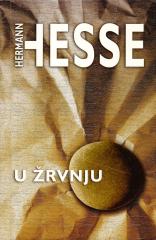
U žrvnju
Herman Heseov roman „Pod mlinom“ prikazuje sukob između umetničkih ideala i društvenih očekivanja kroz priču o mladom pesniku koji pokušava da se snađe u svetu ograničenom konvencijama.