Béla Hamvas

Béla Hamvas (Eperjes—now Prešov in Slovakia—March 23, 1897 – Budapest, November 7, 1968) was a Hungarian philosopher, essayist, writer, and cultural critic, and one of the most original Central European thinkers of the 20th century. He grew up in Bratislava, and after World War I, his family moved to Budapest, where he studied German and Hungarian studies.
From 1927, he worked as a librarian in Budapest, a role that enabled him to engage in the intensive study of philosophy, religion, literature, and ancient spiritual traditions. Hamvas was strongly influenced by Heraclitus, Nietzsche, Kierkegaard, traditional metaphysics, Christianity, Hinduism, Buddhism, Taoism, and Zen. His body of work is characterized by an attempt to bridge European philosophy with the spiritual traditions of the East.
One of his central works is the multi-volume Scientia Sacra, dedicated to the spiritual heritage of archaic cultures and the question of a universal sacred tradition. In the essay collection The Invisible Event (Nevidljivo zbivanje), he examines art, philosophy, and human spiritual existence, while The Philosophy of Wine (Filozofija vina) uniquely blends humor, wine, religiosity, and a celebration of the joy of life.
His most famous literary work, the monumental novel Carnival (Karneval), was written during the 1940s and 1950s. Through the use of the grotesque, philosophical reflection, and a multitude of characters, Hamvas constructs a vast panorama of modern man and the crisis of European civilization. His significant works also include Patmos, Tabula Smaragdina, Silentium, Unicornis, and The Secret Protocol.
He was conscripted during World War II, and his apartment and library were destroyed in a bombing raid. Following the establishment of the communist regime in 1948, he was excluded from public cultural life and banned from publishing. For years, he worked as a manual laborer and warehouseman at power plant construction sites, all the while continuing to write for the drawer.
A large part of his body of work was published only posthumously. Over time, Hamvas attained the status of a cult Central European author, particularly among readers interested in philosophy, religion, art, and the critique of modern civilization. His work represents a distinctive blend of essays, metaphysics, literature, and spiritual quest.
Titles in our offer
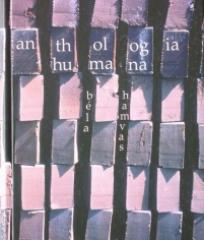
Anthologia humana: pet tisućljeća mudrosti
Discover timeless wisdom in a book that takes you on a fascinating journey through the spirit of humanity! Surrender to the magic of Hamvas' poetic style and discover why Anthologia humana is a masterpiece that transcends time!