Euripid
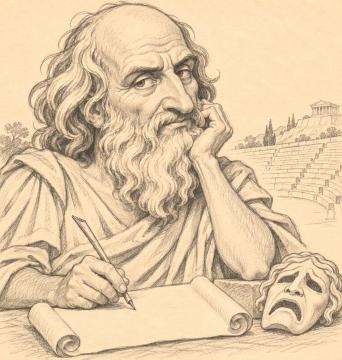
Euripides (c. 485–480 BCE – 406 BCE) was a Greek dramatist and, alongside Aeschylus and Sophocles, one of the three great tragedians of classical Athens. His plays explore conflicts between reason and passion, the fragility of happiness, and the consequences of violence, revenge and power.
Few reliable details of his life survive. Traditionally associated with Salamis and Athens, he first competed at the Athenian dramatic festivals in 455 BCE. He spent his final years in Macedonia at the court of King Archelaus. Many later accounts of his character and death are legendary, drawing partly on comic portrayals rather than dependable biographical evidence.
Seventeen tragedies and the satyr play Cyclops survive from his extensive output. Another tragedy transmitted under his name, Rhesus, is of disputed authorship. His earliest surviving play, Alcestis (438 BCE), examines love, obligation and self-interest through a wife’s willingness to die for her husband.
Medea (431 BCE) confronts betrayal and devastating revenge. Hippolytus (428 BCE) explores forbidden desire and destructive encounters between human beings and divine powers. The Trojan Women (415 BCE) presents war through the suffering of defeated women. Other important works include Hecuba, Electra, Heracles, Helen, Ion and Orestes. The Bacchae and Iphigenia in Aulis were performed posthumously.
Psychologically complex characters, particularly women, distinguish his theatre. Mythological figures speak with recognisably human emotions, confronting contradictory impulses and morally uncertain choices. Divine intervention can bring suffering as readily as resolution.
His influence extends through Roman tragedy to European drama, opera and cinema. Questions of women’s agency, displacement, wartime suffering and personal responsibility continue to make his work compelling to modern audiences.
Titles in our offer
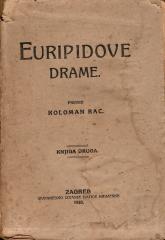
Euripidove drame: Knjiga druga
The second volume of Euripides' tragedies, translated by Koloman Raca. It contains some of his most famous and powerful plays, in which the author explores the human psyche, passions, and man's conflict with myths and fate.

Grčke tragedije: Okovani Prometej, Kralj Edip, Antigona, Medeja i Elektra
Five Greek tragedies explore rebellion, fate, conscience and revenge. Prometheus, Oedipus, Antigone, Medea and Electra confront divine and human power, raising questions of freedom, guilt and responsibility.