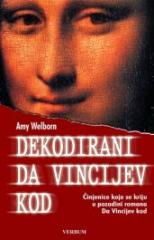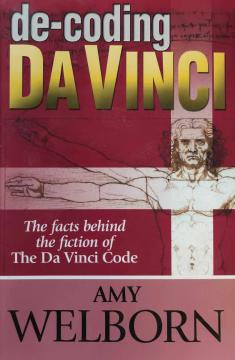
Looks at the theories about Christian origins and church history suggested in the novel, "The Da Vinci Code," and explains how they ignore or misinterpret the available information as it has been understood in Catholic tradition.
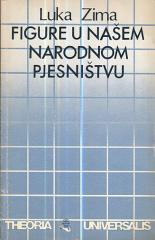
The work is theoretically based, but also focused on application in literary analysis, which is why it plays an important role in Croatian literary theory and academic teaching.
Zavod za znanost o književnosti Filozofskoga fakulteta, 1991.
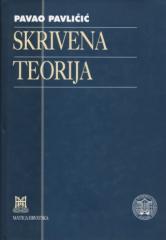
Pavao Pavličić, the author of numerous literary and scientific works, in his latest book "A Small Typology of Modern Croatian Poetry" analyzes in detail all the characteristics of Croatian poetry from the modern period to the present day.
Matica hrvatska, 2008.
Croatian. Latin alphabet. Hardcover with dust jacket.
Žmegač does not only talk about the visual arts, but about the "spirit" of the era that permeates literature: sensuality, the moment, subjectivity, decorativeness, eroticism, decadence, but also the crisis of identity in the fin-de-siècle atmosphere.
Zavod za znanost o književnosti Filozofskoga fakulteta, 1993.
At a time when Croatian writers abroad were often presented only as "Yugoslav", this lexicon clearly and systematically presented Croatian literature as a separate national literature for the first time after World War II.
This is one of the first synthetic analyses of the so-called Croatian fantasy generation (or "Borgesians", "young prose" with elements of fantasy) that appeared in the late 1960s and during the 1970s.
Zavod za znanost o književnosti Filozofskoga fakulteta, 2000.