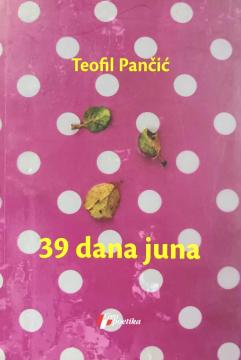
39 dana juna

39 dana juna

Teofil Pančić

39 Days of June is a collection of the author's impressions of a visit to a city called Split, which once belonged to his homeland, and now belongs to the writer by language, friends, memories, choice and new definition.

Sometimes a book is said to be medicine. Perhaps this is why the author's introductory note is entitled "On indications, precautions and adverse reactions". When you read the book, something from the wide range offered by this title will appear among your impressions, for sure. Speaking of which, the title of the book is also associative. It is mostly a travelogue with an unobtrusive and very successfully realized intention to climb into literature, even when it recalls the elements of the daily chronicle. The text says it: this is something stronger than a month of living and observing, comparing and measuring everything in front of you, but also in yourself. Qualifications of life. That stretched month stopped in three cities, one place and the whole of Yugoslavia, but its denominator is still the visitation of one city and one spirit, separation and union. Spirit as soul and spirit as past.

Editor
Vladislav Bajac
Graphics design
Koan
Dimensions
20 x 13.5 cm
Pages
91
Publisher
Geopoetika, Beograd, 2014.
 
Latin alphabet. Paperback.
Language: Serbian.
ISBN
978-8-66145-169-0

No copies available

The last copy was sold recently.
 

Are you interested in another book? You can search the offer using our search engine or browse books by category.

You may also be interested in these titles

Historija porodice Alibegović: transformacija iz begovske zemljoposjedničke u modernu građansku porodicu

Historija porodice Alibegović: transformacija iz begovske zemljoposjedničke u modernu građansku porodicu

Husnija Kamberović

The book depicts the development of a Bosnian bey family that, throughout the 19th and 20th centuries, transformed from a landowning family into a modern bourgeois family, reflecting broader social changes in Bosnia and Herzegovina.

Udruženje za modernu historiju (UMHIS), 2021.
Croatian. Latin alphabet. Paperback.
18.52
Sudbonosni podvig Jugoslavije: Podsjećanje na historijsko NE staljinizmu, događaj koji je opredijelio budućnost Jugoslavije

Sudbonosni podvig Jugoslavije: Podsjećanje na historijsko NE staljinizmu, događaj koji je opredijelio budućnost Jugoslavije

Raif Dizdarević

The book by Raif Dizdarević, one of the last living actors of Yugoslav diplomacy, presents his reconstruction of the most fateful moment of post-war Yugoslavia – the split with Stalin and the Informburo in 1948–1953.

Udruženje za modernu historiju (UMHIS), 2018.
Croatian. Latin alphabet. Paperback.
23.58
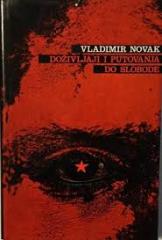
Doživljaji i putovanja do slobode

Doživljaji i putovanja do slobode

Vladimir Novak

Autobiografsko djelo hrvatskog komunističkog aktivista Vladimira Novaka, preživjelog iz ustaških logora, prati njegova sjećanja na otpor fašizmu tijekom Drugog svjetskog rata.

August Cesarec, 1979.
Croatian. Latin alphabet. Hardcover with dust jacket.
8.26
Titostalgija

Titostalgija

Mitja Velikonja

Autor u knjizi istražuje zašto Tito ostaje popularan simbol stabilnosti, socijalne sigurnosti i neovisnosti, unatoč kritičkim pogledima na njegov režim. Knjiga mapira kulturne, političke i svakodnevne manifestacije „titostalgije“.

Biblioteka XX vek, 2010.
Serbian. Latin alphabet. Paperback.
7.36
Blago na putevima Jugoslavije: Enciklopedijsko-turistički vodič

Blago na putevima Jugoslavije: Enciklopedijsko-turistički vodič

Sveobuhvatan enciklopedijski vodič kroz kulturno i prirodno nasljeđe SFRJ. Nastala u duhu jugoslavenskog turizma 1980-ih, knjiga služi kao praktični alat za putnike, nudeći ne samo rute i opise, već i dubinske uvide u povijest, umjetnost i tradicije.

Jugoslavijapublik, 1983.
Croatian. Latin alphabet. Hardcover with dust jacket.
17.56
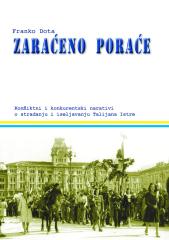
Zaraćeno poraće: Konfliktni i konkurentski narativi o stradanju i iseljavanju Talijana Istre

Zaraćeno poraće: Konfliktni i konkurentski narativi o stradanju i iseljavanju Talijana Istre

Franko Dota

The book analyzes how conflicting historical narratives about the suffering and mass emigration of Italians from Istria and Rijeka developed in Croatia and Italy after World War II (1943–1956), debunking myths and encouraging an empathetic approach to the

Srednja Europa, 2010.
Croatian. Latin alphabet. Paperback.
11.32