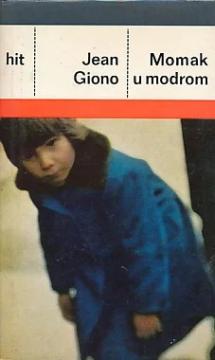
Momak u modrom

Momak u modrom

Jean Giono

The Boy in Blue is an autobiographical novel by Jean Gion about his childhood in Provence. Through memories of family, first friends, and nature, the author depicts the growth and formation of the future writer.

The Boy in Blue is one of the most personal novels by French writer Jean Giono. The work is strongly autobiographical and is based on the author's memories of his childhood in the small town of Manosque in Provence. The main character is a boy Jean, behind whom the author himself is easily recognized, and the novel follows his upbringing in a modest family during the first years of the 20th century.

Jean's parents play an important role in the novel. His father is a shoemaker, a quiet and hardworking man who spends much of his life at his desk, while his mother works as a laundress and supports the family with her own efforts. Through their daily efforts, the boy gets to know the world of work, poverty and dignity. Family relationships are depicted warmly and without idealization.

The plot is not built around a single plot, but through a series of episodes: children's games, walks in nature, meetings with neighbors, first fears, fantasies and discovering the world of adults. Particularly impressive are descriptions of Provence – hills, fields, wind and the scent of nature. For young Jean, nature is not just a backdrop but a space of freedom and imagination that shapes his outlook on life.

Through the boy's observations, Giono depicts the world of little people, their joys, sorrows and everyday struggles. The novel has no dramatic twists, but attracts with atmosphere and living characters. At the same time, it is a story about growing up, family and the emergence of a writer who finds inspiration for all his future work in ordinary people and landscapes.

Original title
Jean le Bleu
Translation
Ana Kolesarić
Editor
Zlatko Crnković
Graphics design
Alfred Pal
Dimensions
19.5 x 12.5 cm
Pages
221
Publisher
Znanje, Zagreb, 1982.
 
Latin alphabet. Hardcover with dust jacket.
Language: Croatian.

One copy is available

Condition:Used, excellent condition
Discounted price: 5.323.99
25% discount is valid until 6/10/26 11:59 pm
 

Are you interested in another book? You can search the offer using our search engine or browse books by category.

You may also be interested in these titles

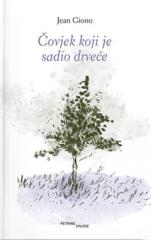
Čovjek koji je sadio drveće

Čovjek koji je sadio drveće

Jean Giono
Petrine knjige, 2022.
Croatian. Latin alphabet. Paperback.
14.32
Život je negdje drugdje

Život je negdje drugdje

Milan Kundera

Jaromil, a young poet raised by a possessive mother, seeks a "real life" in poetry and revolution. His lyrical youth, love, and idealism lead him into conformity and betrayal of intimate relationships – he dies young and unfulfilled.

Znanje, 1979.
Croatian. Latin alphabet. Hardcover with dust jacket.
4.86
Ragtime

Ragtime

E. L. Doctorow

The novel Ragtime (1975) is one of E. L. Doctorow's most famous works, which masterfully interweaves fiction and real historical events. Ragtime is a powerful picture of American society, a novel that sheds light on true historical processes through ficti

Znanje, 1981.
Croatian. Latin alphabet. Hardcover with dust jacket.
4.74 - 4.76
Spašeni jezik: Povijest jedne mladosti

Spašeni jezik: Povijest jedne mladosti

Elias Canetti

Autobiographical novel by Elias Canetti. The story begins when his young nanny secretly meets with the young man, which he sees as a child. The young man constantly threatened him that if he said anything to the adults, he would cut out his tongue.

Znanje, 1982.
Croatian. Latin alphabet. Hardcover with dust jacket.
8.76
Tijela i duhovi

Tijela i duhovi

Mirko Božić

Bodies and spirits is the third part of the Kurlan trilogy by Mirko Božić, published in 1981, which follows the novels Kurlani (1952) and Neisplakani (1955).

Znanje, 1981.
Croatian. Latin alphabet. Hardcover with dust jacket.
4.98
Zajednička kupka

Zajednička kupka

Ranko Marinković

The communal bath is a kind of recapitulation - in it, Marinković's obsessive motives (humiliation, fraud and death) are discussed in the most direct and immediate way. In one of its layers, the novel is also a metaphor for literature, an allegory about t

Znanje, 1980.
Croatian. Latin alphabet. Hardcover with dust jacket.
8.56