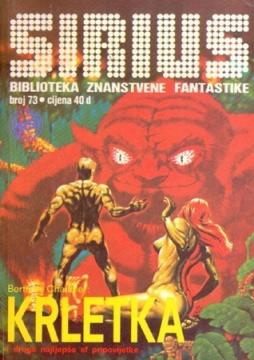
Sirius #73: Biblioteka znanstvene fantastike
Sirius je bio hrvatski časopis za znanstvenu fantastiku. Osnivanje je predložio Damir Mikuličić 1976. U Siriusu su objavljeni radovi domaćih autora, kao i prijevodi inozemnih autora SF-a. Izlazio je od 1976. do 1989. godine.
Bertram Chandler: KRLETKA 4 (The Cage; preveo Zoran Milović) Robert Silverberg: VJETAR I KIŠA 17 (The Wind and the Rain; prevela Vesna Paravić) Slobodan Ivkov: SVEČANO OTVARANJE 26 Alain Doremieux: ŽENA-MODEL 30 (La femme modèle; prevela Jadranka Supić) Dragan R. Filipović: TRAGOM STARE PRIČE 43 Terry Carr: VIRRA 48 (Virra; preveo Žarko Vodinelić) Živko Prodanović: KATASTROFA – KRAJ ILI POČETAK 69 Alan E. Nourse: PRIJELAZ SVIJETLOM STRANOM 75 (Brightside Crossing; preveo Zoran Milović) Miran Župan: KRUG 99 (Krog; preveo Krunoslav Poljak) Doris Vallejo: ZAVOĐENJE 106 (Seduction; preveo Žarko Vodinelić) Ray Bradbury: USHER II 116 (Usher II; preveo Zoran Milović) Frank L. Calloway: MIŠ 134 (Mr. Mouse; preveo Zoran Milović) Roger Zelazny: IGRA KRVI I PRAŠINE 136 (The Game of Blood and Dust; preveo Zoran Milović)
Boris Marini: Vidovitost
One copy is available