Volite kraljicu Mariju Tereziju

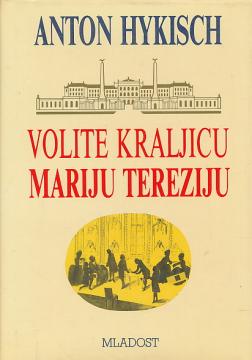
Volite kraljicu Mariju Tereziju

Anton Hykisch

This historical prose follows the story of the famous Austrian empress Maria Theresa. The work is the first edition of the Gama library.

Maria Theresa, the Austrian empress who ruled from 1740 to 1780, left a deep mark on history. Here are some of the ways she has made an impact:

  • Modernization and reforms: Maria Theresa carried out numerous reforms to modernize the Habsburg Monarchy. This includes reforms in the fields of education, military, judiciary and administration.
  • Centralization of power: The empress strengthened the central government and reduced the power of the nobility. Its reforms increased the efficiency of the administration and enabled better control over the territory.
  • Economic reforms: Maria Theresa encouraged agriculture, trade and industry. It improved the infrastructure, built roads and encouraged the development of mining.
  • Education: The empress founded numerous schools and promoted education. Her support for education contributed to the progress of society.
  • Succession: Her son, Emperor Joseph II., continued her reforms and expanded them. Their legacy left a lasting impact on Europe.

In short, Maria Theresa was a strong ruler who modernized her empire and left a deep mark on European history.

Original title
Milujte kralovnu
Translation
Anka Katušić Balen
Editor
Zvonimir Majdak
Graphics design
Fadil Vejzović
Dimensions
20.5 x 14 cm
Pages
495
Publisher
Mladost, Zagreb, 1989.
 
Latin alphabet. Hardcover with dust jacket.
Language: Croatian.

No copies available

The last copy was sold recently.
 

Are you interested in another book? You can search the offer using our search engine or browse books by category.

You may also be interested in these titles

Beleške jedne Ane / Hej, nisam ti to pričala

Beleške jedne Ane / Hej, nisam ti to pričala

Momo Kapor

Momo Kapor's "Notes of One Ana" were created from texts that began to be published in 1968 in the magazine Bazar. This collection of prose texts, known as the first "prose in jeans", quickly gained popularity in Yugoslavia.

Znanje, 1982.
Croatian. Latin alphabet. Hardcover with dust jacket.
8.42 - 8.44
Divlji kvas

Divlji kvas

Ivica Đikić

Ivica Đikić in Divlji kvas masterfully, with a lot of humor and bitterness, revives the atmosphere of a provincial town where everyone knows everyone, and where the past and the present cannot be separated

Fraktura, 2024.
Croatian. Latin alphabet. Hardcover with dust jacket.
13.76
Samrtno proljeće

Samrtno proljeće

Lajos Zilahy

A young diplomat returns from Barcelona devastated by the separation from his beloved woman. However, he soon meets a new love. But when he is about to crown this relationship with marriage, his former girlfriend returns.

Zora, 1955.
Croatian. Latin alphabet. Hardcover with dust jacket.
2.64
Dok višnje procvetaju

Dok višnje procvetaju

Magda Simin
Mladost, 1980.
Croatian. Latin alphabet. Hardcover.
5.22
I ne reče ni reči

I ne reče ni reči

Heinrich Böll

In Boll's novels, one of the central themes is the attempt to preserve basic moral values ​​in a time of terror, as well as in a period of material prosperity and corruption.

Svjetlost, 1965.
Serbian. Latin alphabet. Paperback.
3.22 - 3.98
Karte za izgubljene ljubavnike

Karte za izgubljene ljubavnike

Nadeem Aslam

Cards for Lost Lovers is a novel by British-Pakistani writer Nadeem Aslam. This is an exceptional and rarely refined novel.

Naklada Ljevak, 2010.
Croatian. Latin alphabet. Paperback.
6.62