
44 mjeseca u Jasenovcu
Dimensions
20 x 14 cm
Pages
96
Publisher
Grafički zavod Hrvatske (GZH), Zagreb, 1966.
Latin alphabet. Hardcover with dust jacket.
Language: Croatian.
No copies available
The last copy was sold recently.
No copies available
The last copy was sold recently.
Are you interested in another book? You can search the offer using our search engine or browse books by category.
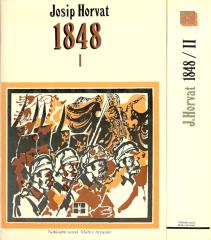

The book One Thousand Eight Hundred and Eight (first edition 1934, second 1973) by Josip Horvat is a detailed account of the revolutionary year 1848 in Croatia, a key moment in the shaping of national identity and political consciousness.
The collection Essays and Articles by Ljubo Karaman, an eminent art historian, includes a series of texts on Croatian art, with an emphasis on the medieval heritage of Dalmatia and its connection with European cultural movements.
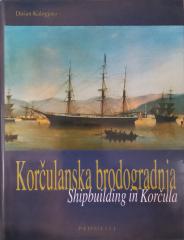
The monograph Korčula Shipbuilding by Dušan Kalogjera explores the rich history of shipbuilding on the island of Korčula, a key center of Adriatic maritime tradition from the Middle Ages to the present day.

This is the first book that comprehensively addresses the phenomenon of Croatian students and their role in the Croatian Spring. Students, along with the reform wing of the League of Communists and Matica Hrvatska, were one of the three pillars of the Cro
It is a work that combines historical research, musicological analysis, and local cultural chronicle.