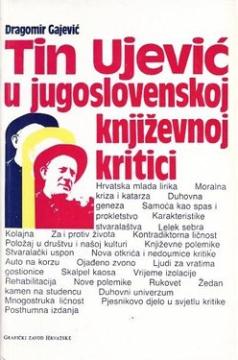
Tin Ujević u jugoslovenskoj književnoj kritici

Tin Ujević u jugoslovenskoj književnoj kritici

Dragomir Gajević

This extensive 438-page work analyzes the reception and critical reviews of the work of one of the most significant Croatian poets, Tin Ujević, within the Yugoslav literary space.

Gajević explores in detail how different literary critics and theorists have approached Ujević's work, providing insight into the evolution of the perception of his poetic oeuvre over time. The book includes analyses of critics from the beginning of Ujević's career to his later works, highlighting changes in the interpretations and valorizations of his work.

The author looks at various aspects of Ujević's poetry, including thematic preoccupations, stylistic innovations, and philosophical reflections. Special attention is paid to the way critics have interpreted Ujević's use of language, symbolism, and metrical forms, as well as his ability to express universal human experiences through poetry.

The book also provides an overview of the polemics and debates that have taken place around Ujević's work, pointing to the different critical approaches and theoretical frameworks that have been applied in the analysis of his poetry. Gajević's work thus becomes a valuable source for understanding not only Ujević's literary legacy, but also the broader context of Yugoslav literary criticism and its methodological approaches.

This study is important for all who wish to gain a deeper understanding of the reception and interpretation of Ujević's work, as well as for those interested in the development of literary criticism in the former Yugoslavia.

Editor
Mate Maras
Graphics design
Zoran Pavlović
Dimensions
23.5 x 15.5 cm
Pages
438
Publisher
Grafički zavod Hrvatske (GZH), Zagreb, 1988.
 
Latin alphabet. Hardcover.
Language: Croatian.

One copy is available

Condition:Used, excellent condition
Damages or inconvenience notice:
  • Slight damage to the cover
 

Are you interested in another book? You can search the offer using our search engine or browse books by category.

You may also be interested in these titles

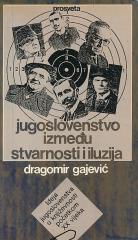
Jugoslovenstvo između stvarnosti i iluzija

Jugoslovenstvo između stvarnosti i iluzija

Dragomir Gajević
Prosveta, 1985.
Serbian. Latin alphabet. Paperback.
3.99
Magarcima pucaju rebra: Zapisi varoškog skribe

Magarcima pucaju rebra: Zapisi varoškog skribe

Leo Držić

In the novel Donkeys' Ribs Are Cracking - The Notes of a Town Scribe, Leo Držić humorously brings 17th-century Zagreb to life through the notes of clerk Dominik Pivarić. Through the conflicts between Gradec and Kaptol, a satirical chronicle of power, pett

Znanje, 1980.
Croatian. Latin alphabet. Paperback.
6.78
Privrženost

Privrženost

Drago Kekanović

Historical prose about the settlement of Serbs in Croatian territories in the 15th century, focused on the fate of Kantakouzena Katarina Branković (daughter of Despota Jerina and Despot Đurađ Branković, sister of Mara, wife of Sultan Mehmed II the Conquer

SKD Prosvjeta, 2021.
Serbian. Cyrillic alphabet. Paperback.
11.268.45
Svaki je kamen da se kuća gradi: Hrvatske poslovice sakupljene u naše dane po književnim i jezikoslovnim djelima nastalima od 12. do 19. stoljeća

Svaki je kamen da se kuća gradi: Hrvatske poslovice sakupljene u naše dane po književnim i jezikoslovnim djelima nastalima od 12. do 19. stoljeća

Josip Kekez

An anthological collection with comments by Josip Kekez, a Croatian folklorist and Slavist. A classic work of Croatian folkloristics from the 1980s.

Izdavački centar Revija, 1986.
Croatian. Latin alphabet. Paperback.
3.86
Pripovijetke

Pripovijetke

Vjenceslav Novak

This edition brings four key stories by Vjenceslav Novak (1859–1905), one of the most important Croatian realists, known for his social sensitivity and depictions of urban poverty at the turn of the 19th and 20th centuries.

Zagrebačka stvarnost, 2001.
Croatian. Latin alphabet. Hardcover.
7.32
Koncert za tequilu i apaurin

Koncert za tequilu i apaurin

Edo Popović

A short novel by Edo Popović, one of the most important Croatian prose writers of the 1990s and 2000s. The book is part of Popović's "Zagreb Cycle" – a critique of transition without pathos, but through absurdity and grotesqueness.

Meandar, 2003.
Croatian. Latin alphabet. Paperback.
3.26