Hram i loža

Hram i loža

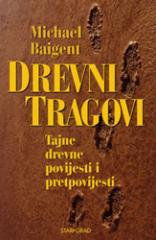
Michael Baigent, Richard Leigh

Although considered controversial by historians and often criticized as speculative and lacking solid evidence, the book is indispensable and extremely influential – it directly inspired Dan Brown's "The Da Vinci Code" and the entire genre of esoteric lit

The book claims that the Knights Templar survived the destruction of the Order in 1312 and fled to Scotland, where they hid among the guilds of masons (freemasons). There they passed on their secret knowledge, esoteric rituals, and alleged “sacred treasures” (possibly documents or relics from the Temple in Jerusalem). From this fusion of Templar heritage and Scottish Masonic lodges came modern Freemasonry (speculative Masonry), founded in 1717 in London.

The authors trace the trail of:

  • the excavation of the Templars under Solomon’s Temple (1119–1128),
  • the accusations of heresy and the abolition of the Order by Philip IV. and Pope Clement V,
  • the escape of the fleet from La Rochelle in 1307,
  • the appearance of Templar symbols in Rosslyn Chapel (1450) in Scotland,
  • the role of the Templar families (Sinclair, Bruce) in Scottish politics and the Battle of Bannockburn in 1314 (where they allegedly helped Robert the Bruce),
  • to the founding of the Grand Lodge in London in 1717 and the spread of Freemasonry throughout Europe and America.

Baigent and Leigh argue that the American Founding Fathers (Washington, Franklin, Jefferson) were Freemasons of the Templar type and that they incorporated Templar-Masonic ideas about a "new world order" and spiritual freedom into the US Constitution and the symbolism of the dollar.

Original title
The Temple and the Lodge
Translation
Petra Štrok
Editor
Božica Cikuša, Zdravko Cikuša
Graphics design
Darko Dautović
Dimensions
24 x 17 cm
Pages
350
Publisher
Stari grad, Zagreb, 2005.
 
Latin alphabet. Hardcover.
Language: Croatian.
ISBN
978-9-53671-643-2

Multiple copies are available

Copy number 1

Condition:New

Copy number 2

Condition:New

Copy number 3

Condition:New

Copy number 4

Condition:New
 

Are you interested in another book? You can search the offer using our search engine or browse books by category.

You may also be interested in these titles

Važnost nalaza ranosrednjovjekovnog koplja u Varaždinu

Važnost nalaza ranosrednjovjekovnog koplja u Varaždinu

Željko Tomičić
Jugoslavenska akademija znanosti i umjetnosti, 1968.
Croatian. Latin alphabet. Paperback.
4.983.74
Hrvatski vladari 1-5.

Hrvatski vladari 1-5.

Neven Budak
Večernji list, 2012.
Croatian. Latin alphabet. Paperback.
The book consists of 5 volumes
12.34 - 15.32
Ilustrirana povijest svijeta: Rani srednji vijek (907.-1154.)

Ilustrirana povijest svijeta: Rani srednji vijek (907.-1154.)

Karin Feuerstein-Praßer, Andrea Groß-Schulte, Marion Jung, Cornelia Lawrenz, Karin Prager, Otto S...

The fourth volume of Reader's Digest's "Illustrated History of the World" series, illustrated in color, intended for history buffs, provides an overview of key events and civilizational achievements around the world, in the period from 907 to 1154.

Mozaik knjiga, 2010.
Croatian. Latin alphabet. Hardcover.
11.56
Povijest Europe - od seobe naroda do XVI stoljeća

Povijest Europe - od seobe naroda do XVI stoljeća

Henri Pirenne
Marjan tisak, 2005.
Croatian. Latin alphabet. Paperback.
6.965.24 - 6.986.96
Srednjevekovna umetnost u Srbiji i Makedoniji: Crkvena arhitektura i skulptura

Srednjevekovna umetnost u Srbiji i Makedoniji: Crkvena arhitektura i skulptura

Đurđe Bošković
Jugoslovenska knjiga, 1948.
Serbian. Cyrillic alphabet. Hardcover.
5.48
O kraljevstvu Dalmacije i Hrvatske

O kraljevstvu Dalmacije i Hrvatske

Ivan Lučić-Lucius

The life work of Ivan Lučić and the debut of Croatian historiography (first printed in 1666 in Amsterdam). The work appears for the first time in the form the author intended, with the author's corrections and additions as well as critical treatment of in

Biblioteka Latina & Graeca, 1986.
Croatian. Latin alphabet. Paperback.
18.24