Savremena Evropa ili karakteristika evropskih država i naroda
Rare book
Antique

Savremena Evropa ili karakteristika evropskih država i naroda

Stjepan Radić

Contemporary Europe (1905) is a political journalistic work by Stjepan Radić in which the author analyzes European states, peoples, cultures and political systems, as well as the place of Slavic peoples in contemporary Europe.

The book Modern Europe or Characteristics of European States and Peoples by the Croatian politician and publicist Stjepan Radić was published in 1905. The work was awarded by the Count Drašković Foundation for 1904, and represents one of Radić's most important publicistic and political science achievements from the early period of his work.

The author seeks to provide the reader with a comprehensive picture of Europe at the turn of the 19th and 20th centuries. He analyzes the historical development of European states, their political institutions, social relations, economic conditions and national characteristics. He pays special attention to the character of individual nations, their cultural values ​​and the role they play in shaping European civilization. Radić views Europe as a community of different historical and cultural areas and seeks to explain the relationships between the Romance, Germanic, Anglo-Saxon and Slavic peoples.

The book discusses issues of national identity, democracy, social development and the position of the peasantry, which Radić considered the basis of political and economic progress. The author presents his own views on the future of Europe and emphasizes the importance of education, political freedom and equality of peoples. The work reflects his broad education and experience gained during his travels and studies of European societies.

Contemporary Europe is today a valuable historical source for studying the political thought of Stjepan Radić and European ideas from the early 20th century. The book testifies to the effort to bring contemporary European political and social processes closer to the Croatian audience and occupies an important place in the Croatian political and cultural heritage.

Dimensions
22 x 15 cm
Pages
432
Publisher
Matica hrvatska, Zagreb, 1905.
 
Latin alphabet. Hardcover.
Language: Croatian.

One copy is available

Condition:Used, very good condition
Specificity of this instance:
Bound
Damages or inconvenience notice:
  • Traces of patina
 

Are you interested in another book? You can search the offer using our search engine or browse books by category.

You may also be interested in these titles

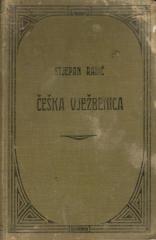
Češka vježbenica za srednje i njima slične škole

Češka vježbenica za srednje i njima slične škole

Stjepan Radić

Czech language textbook with exercises for high schools. A practical language manual written by Stjepan Radić in 1911 with the aim of bringing the Croatian and Czech peoples closer together.

Troškom i nakladom Kr. hrv.-slav.-dalm. zemalj. vlade, 1911.
Croatian. Latin alphabet. Hardcover.
9.54
Danton i Marat: izbor govora i članaka

Danton i Marat: izbor govora i članaka

Georges Jacques Danton, Jean Paul Marat

Great people and their works

Kultura, 1955.
Croatian. Latin alphabet. Hardcover with dust jacket.
7.22
Glosarij

Glosarij

Jevrem Brković

A glossary is a dictionary that interprets unknown and unclear words and terms, and Jevrem Brković's "Glossary" is much more than that. It is a collection of short texts written in a polemical and feuilleton style, which also has an autobiographical stamp

Aurora, 1996.
Croatian. Latin alphabet. Paperback.
4.62
Svjedok (ne)vremena

Svjedok (ne)vremena

Branimir Lukšić

The book is both a personal and social testimony to the turbulent times the Croatian people went through, especially during the 20th century.

Matica hrvatska, 1998.
Croatian. Latin alphabet. Paperback.
8.14
Doživljaji i putovanja do slobode

Doživljaji i putovanja do slobode

Vladimir Novak

The autobiographical work of Croatian communist activist Vladimir Novak, a survivor of the Ustasha camps, follows his memories of resistance to fascism during World War II.

August Cesarec, 1979.
Croatian. Latin alphabet. Hardcover with dust jacket.
8.265.78
Što je Opus Dei? Priče o Bogu, krvi, novcu i vjeri

Što je Opus Dei? Priče o Bogu, krvi, novcu i vjeri

Noam Friedlander

The Catholic movement Opus Dei, founded in 1928 in Spain as a small devout group, is today one of the most influential and richest church organizations in the world – with millions of members, a headquarters in New York worth billions, and branches across

Naklada Ljevak, 2005.
Croatian. Latin alphabet. Hardcover.
13.26