Hrvatska mladost — list za srednjoškolsku mladež, god. XXV, broj 3.
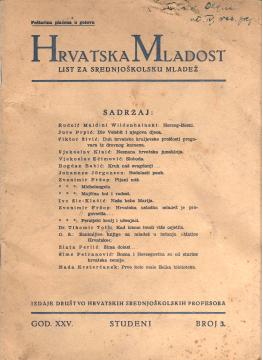
„Hrvatska mladost“ — list za srednjoškolsku mladež, god. XXV, broj 3., jedan od prvih brojeva izašlih u NDH, kada je glasilo postalo namijenjeno srednjoškolcima u okviru ustaške promidžbe i odgoja mladeži.
Hrvatska mladost – list za srednjoškolsku mladež, godina izlaženja XXV, broj 3., izašao je 1941. godine u Zagrebu. List je uređivao Đuro Arhanić, a izdavao ga je Društvo hrvatskih srednjoškolskih profesora. Nastavio je predratnu tradiciju (ranije pod drugim nazivima), ali je u NDH potpuno prilagođen novom režimu i služio kao važno glasilo srednjoškolske omladine u sustavu Ustaške mladeži.
Broj 3. iz 1941. spada među prve brojeve u novim okolnostima nakon proglašenja NDH (travanj 1941.). Sadržaj je tipičan za tu vrstu periodike: kombinacija domoljubnih tekstova, književnih priloga (pjesme, eseji), pedagoških tema, izvještaja o radu omladinskih organizacija te propagandnih poruka ustaškog pokreta. Naglasak je bio na odgoju u duhu hrvatskog nacionalizma, žrtve, discipline, katoličkog morala i odanosti Poglavniku i novoj državi. Često su se objavljivali tekstovi o „Božiću u slobodnoj domovini“ (kao u božićnom broju 4. iste godine) ili sličnim motivima koji su slavili uspostavu NDH.
List je bio namijenjen učenicima srednjih škola — ključnoj ciljnoj skupini Ustaške mladeži (posebno Starčevićeve mladeži za dob 15–21 godinu). Služio je kao alat za ideološko oblikovanje budućih intelektualaca, učitelja i aktivista režima. U širem kontekstu NDH, takve publikacije bile su dio sustavne kontrole nad školstvom i mladeži, uz ostale listove poput križarskih ili čisto ustaških glasila.
Izlazio je do 1944/1945. (do god. 28/29). Danas su primjerci iz 1941. rijetki i predstavljaju važan povijesni izvor za proučavanje medija, propagande, školstva i odgoja mladeži u NDH. Ovakav broj svjedoči o brzom prilagođavanju predratnih institucija (kao Društvo hrvatskih srednjoškolskih profesora) novom ustaškom poretku i nastojanju režima da što prije osvoji svjetonazor srednjoškolske populacije u turbulentnoj prvoj godini postojanja NDH.
Jedan primjerak je u ponudi
- Blago oštećenje korica