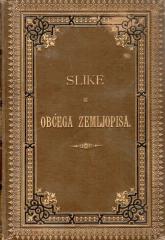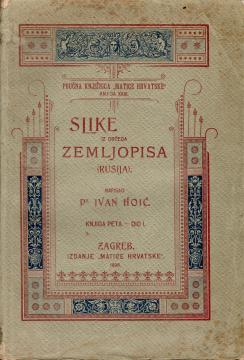
Slike iz obćega zemljopisa. Knjiga V., dio I.: Rusija
Pictures from General Geography. Book V., Part I.: Russia is a geographical work by Ivan Hoić that provides a systematic overview of the Russian Empire, its natural features, population, economy, and culture.
Pictures from General Geography. Book V., Part I.: Russia was published by Ivan Hoić in 1898 in Zagreb, published by Matica Hrvatska, as part of a comprehensive geographical library intended to popularize contemporary geographical knowledge among the Croatian readership. The work belongs to the fifth book in a series dedicated to European Slavic states and is entirely dedicated to Russia, then the largest state in the world and the center of the Slavic space.
The book provides a detailed overview of the natural-geographical and socio-geographical features of the Russian Empire at the end of the 19th century. The author discusses the geographical position, relief, river systems, climate, flora and fauna, and the country's natural resources. Special attention is paid to the population, ethnic diversity, languages, religions, economy, transport, trade, and political organization of the state. Hoić simultaneously presents the capitals, cultural centers, and individual provinces, attempting to bring the reader closer to the vast space of Russia and its importance in the European and global context.
The work was written in the spirit of geography at the end of the 19th century, when geography was not limited to the description of space but also linked natural conditions with the history, culture and development of nations. The book contains 97 illustrations and one geographical map, which visually complement the text and facilitate the understanding of the topics covered.
This work represented one of the most comprehensive Croatian geographical descriptions of Russia of its time. Today it has value not only as a geographical manual but also as a testimony to the level of Croatian scientific and popular science literature at the turn of the 19th and 20th centuries and to the then-present ideas about Russia and the Slavic world.
One copy is available