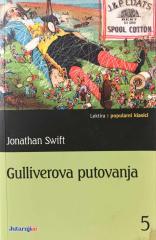
Guliverova putovanja u Liliput
A famous satirical novel by Jonathan Swift. Through the fantastic travels of ship's doctor Lemuel Gulliver to exotic lands, the author sharply and humorously criticizes human nature, society, and politics.
"Gulliver's Travels" (originally published in 1726) is a masterpiece of English literature and one of the most famous satires in history. Although often read as an exciting adventure story for children, Jonathan Swift's novel is at its core a deep, sharp and merciless criticism of human society, political intrigue, scientific exaggeration and human nature itself. Through four thematic parts, the ship's doctor Lemuel Gulliver travels to unknown and bizarre worlds. First, he visits Lilliput, a land of dwarfs where the banality of political conflicts is exposed through meaningless wars over the correct way to break an egg. Then he arrives in Brobdingnag, a land of giants, where from the position of a tiny observer he understands all the filth and corruption of European society. The third journey takes him to the flying island of Laputa and to the Balnibarbi Academy, where Swift ridicules the useless abstract science divorced from real life. On his last journey, Gulliver meets the Houyhnhnms, wise and intelligent horses, and the Yahu, disgusting and vile human creatures, which leads him to a complete disillusionment with his own kind. Written in the form of a compelling travelogue, the novel abounds in wit, irony, and timeless messages that still inspire reflection on human flaws and social absurdities today.
Two copies are available
Copy number 2
- Traces of patina