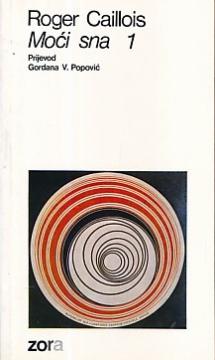
Moći sna 1.
In the first volume, Caillois explores the nature, symbolism, and mechanisms of dreams. He analyzes how dreams shape human consciousness, culture, and literature, examining the boundaries between unconscious imagination and reality.
"The Power of Dreams" is one of the key works of the French essayist, sociologist and literary theorist Roger Caillois. In this 1983 edition, the author approaches the phenomenon of dreams from an interdisciplinary perspective, combining anthropology, psychoanalysis, literary theory and philosophy. Caillois does not view dreams simply as a biological or purely psychological phenomenon, but as an autonomous space of creativity and a powerful source of human imagination. The first volume focuses on the analysis of the structure and function of dreams and their influence on the waking state and cultural creativity. The author explores how dreams create their own logic, subvert conventional notions of time and space, and create specific symbols that permeate mythologies and art. Caillois pays special attention to the relationship between dreams and literature, showing how night visions have inspired writers and shaped fantastic genres for centuries. By examining the boundary that separates dreams from reality, the work leads the reader to question the very nature of reality and human perception. Caillois' style is extremely analytical, but at the same time elegant and poetically inspired. The publication is indispensable reading for all who deal with the theory of art, psychology and phenomenology of human consciousness.
One copy is available
- Traces of patina