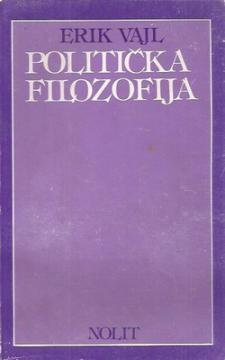
Politička filozofija
One copy is available

One copy is available
Are you interested in another book? You can search the offer using our search engine or browse books by category.
A 1923 book by the Hungarian philosopher György Lukács, in which the author emphasizes the influence of the philosopher Georg W. F. Hegel on Karl Marx, and analyzes the concept of "class" and attempts to offer a philosophical justification for Bolshevism.
In Utopia, Thomas More depicts an imaginary perfect society located on an isolated island, where the ruling principles of harmony, equality and reason overcome the imperfections of European society at the time.
The book presents a Marxist analysis of the digital age, where technology is not a neutral tool, but a process subject to the logic of capital. The author advocates a 21st century democratic socialism: technology for needs, not profit.
In this book Herbert Marcuse makes clear that capitalism is now reorganizing itself to meet the threat of a revolution that, if realized, would be the most radical of revolutions: the first truly world-historical revolution.
The book deals with a critical review of the ideological and practical aspects of the Stalinist regime, and its consequences on Soviet society and beyond.
Peter L. Berger's book is a sociological analysis of capitalism as a cataclysmic force in modern society. Berger's thesis is that capitalism is not just an economy, but a revolutionary process that changes the material, social, political, and cultural asp