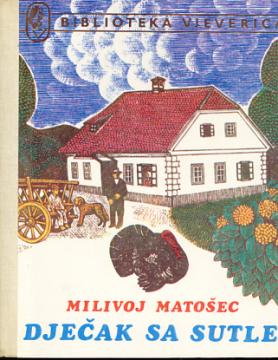
Dječak sa Sutle
The Boy from the Sutle River is a biographical novel by Milivoje Matošec about the childhood of Josip Broz Tito. Through an idealized depiction of his upbringing, the author highlights the traits that represent him as a future leader and national hero.
The Boy from the Sutle is a biographical novel for young people by Croatian writer Milivoje Matošec. The main character is Josip Broz Tito, later a partisan commander in World War II and long-time president of the Socialist Federal Republic of Yugoslavia. The novel depicts his childhood in Kumrovec and the Croatian Zagorje region at the end of the 19th century, attempting to identify in his early life experiences the traits that would mark his later political and military role.
The work was written during the socialist Yugoslavia period and has a strong hagiographic and educational character. The author portrays young Josip as exceptionally resourceful, brave, just and sensitive to injustice. Even as a boy, he stands out among his peers with his curiosity, independence and willingness to help others. In this way, Matošec builds an image of a future leader whose extraordinary qualities can be observed even at an early age.
The plot consists of a series of episodes from his boyhood life. His relationships with family, friends and fellow villagers, school days, children's games and everyday chores in the village are described. The dog Polak, Josip's faithful companion in many adventures, also plays an important role. Among the more famous incidents is the episode with the dry pig's head, which emphasizes the boy's ingenuity and mischief.
In addition to the story of growing up, the novel presents a depiction of the lives of poor Zagorje peasants, their customs and difficult living conditions. However, historical and social reality is subordinated to the main intention of the work - creating a positive and almost exemplary portrait of the young Josip Broz. For this reason, The Boy from the Sutla is today viewed not only as a children's novel but also as a literary example of the culture of memory and political mythologizing of one of the most important figures in Yugoslav history.
Multiple copies are available