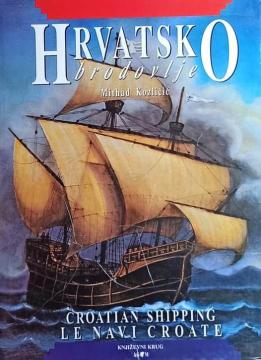
Hrvatsko brodovlje
No copies available
The last copy was sold recently.
No copies available
The last copy was sold recently.
Are you interested in another book? You can search the offer using our search engine or browse books by category.
The generation to which Konstantinović belonged managed to reach an agreement and, had it not been for the Second World War, was on the threshold of establishing liberal democracy in Yugoslavia, whose supporter Konstantinović was.
Josip Bersa's book vividly depicts the social, political, and cultural life of Dubrovnik in the 19th century, combining historical facts and personal memories into a picturesque portrait of the city in a period of change.
The book analyzes how conflicting historical narratives about the suffering and mass emigration of Italians from Istria and Rijeka developed in Croatia and Italy after World War II (1943–1956), debunking myths and encouraging an empathetic approach to the
The Bleiburg Tragedy and the Way of the Cross of the Croatian People in 1945 is a historical-documentary work by Croatian historian and university professor Anđelko Mijatović.
The book represents a novelty not only in Istrian, but also in Croatian historiography. Namely, the clothing culture in the region of Istria in the early modern period has not yet been analyzed at all, and for the region of Dalmatia only sporadically.
A memoir by Petar Krista, a member of the Dubrovnik Crisis Staff, about the first months of the siege of the city. The work records the political background, military reality, and personal drama of the defense of Dubrovnik.