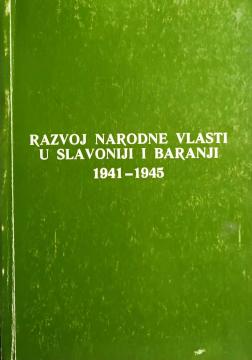
Razvoj narodne vlasti u Slavoniji i Baranji, 1941.-1945.
One copy is available

One copy is available
Are you interested in another book? You can search the offer using our search engine or browse books by category.
Amir Duranović's book reconstructs in detail the dramatic year 1966 and the Fourth (Brion) Session of the Central Committee of the Communist Party of Yugoslavia (July 1–2, 1966), at which Aleksandar Ranković, the long-time head of the UDB and vice preside
The book's starting point is that the Serbs were not only caught up in the Enlightenment later than its European foray in the 18th century, but they resisted it even when it caught up with them. In the Balkans, history followed different paths, had differ
In this book of essays, Muharem Bazdulj analyzes how the collapse of Yugoslavia and the wars of the 1990s resonated in Anglo-Saxon literature – from pre-war stereotypes to war and post-war depictions.
In her provocative essay, Dubravka Ugrešić considers life in post-socialist Europe and Croatia using the example of spas.
The autobiographical work of Croatian communist activist Vladimir Novak, a survivor of the Ustasha camps, follows his memories of resistance to fascism during World War II.
What is possible to do in the face of the mystery of trust as a mediated relationship between people and the unknown of confidence as the dark content of freedom and the interactions of people?