Croatian literature • History of literature
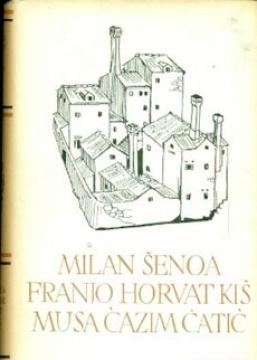
Pet stoljeća hrvatske književnosti: Milan Šenoa, Franjo Horvat Kiš, Musa Ćazimćatić
Five centuries of Croatian literature: Milan Šenoa, Franjo Horvat Kiš, Musa Ćazimćatić, volume 67. Stories, exodus - Stories, travelogues - Poems. Edited by Abdurahman Nametak and Miroslav Šicel.
Editor
Šime Vučetić
Dimensions
20 x 13.5 cm
Pages
524
Publisher
Zora, Matica hrvatska, Zagreb, 1966.
Latin alphabet. Hardcover with dust jacket.
Language: Croatian.
One copy is available
Condition:Used, good condition (visible signs of use)
"Nativity Scene" depicts the spiritual and family warmth of Christmas time, through the story of simple people whose hearts open to kindness, giving, and faith as they prepare for the feast of Christ's birth.
A historical novel that follows the heroic struggle of Ban Ivan Karlović (a Croat) against the Turkish conquests in Lika and Krbava at the beginning of the 16th century, with an emphasis on the fall of Kosinje, heroism, betrayal, and defense of the Christ
A collection of short stories that realistically and patriotically portrays life and events from the period of absolutism and the Bach regime, the military administration, Croatian officers, ordinary people and their fates in difficult times.
Matica hrvatska, 1905.
Croatian. Latin alphabet. Hardcover.
8.24 €
Croatian literature • Croatian history • Romanced history
Nehajev's "Rakovica", in the edition edited by Blaž Jurišić, presents the Rakovica Rebellion, its causes and ideas. Nehajev did not finish the book due to his sudden death; it was completed and edited by Blaž Jurišić.
Matica hrvatska, 1932.
Croatian. Latin alphabet. Hardcover.
5.42 - 8.26 €
Croatian literature • Novele • Short Stories • Social literature
The first edition of a collection of short stories by Slavko Kolar. It satirically and with warm humor depicts the life of the Croatian village and the small town in the Kingdom of Yugoslavia, the fight for justice, political compromises, corruption, and
A historical novel set around Medvedgrad and Zagreb's Gradec. It depicts political intrigues, struggles for power, conflicts between nobles and citizens, and the fate of the girl Janja, a symbol of freedom and sacrifice in turbulent times.