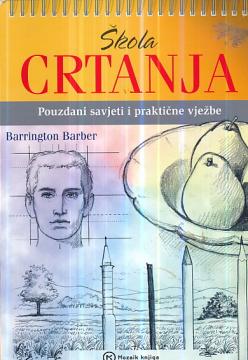
Škola crtanja - Pouzdani savjeti i praktične vježbe

Škola crtanja - Pouzdani savjeti i praktične vježbe

Barrington Barber

Anyone who wants to learn to draw can do it quickly and successfully - with the tips and exercises from the book School of Drawing.

All that is needed to draw well is the desire to learn, a little persistence, the ability to observe and the willingness to correct mistakes. Many of the exercises in this book were created using a tried and tested method used by many painting students and professional artists.

Original title
The fundamentals of drawing - A complete professional course for artists
Translation
Nada Uglješić
Editor
Ivanka Borovac
Dimensions
29.5 x 21 cm
Pages
208
Publisher
Mozaik knjiga, Zagreb, 2007.
 
Latin alphabet. Paperback.
Language: Croatian.

No copies available

The last copy was sold recently.
 

Are you interested in another book? You can search the offer using our search engine or browse books by category.

You may also be interested in these titles

Crtanje portreta

Crtanje portreta

Douglas R. Graves

Learn to draw portraits of men, women, children in charcoal, pencil, chalk and Conte pencil

Marjan tisak, 2002.
Croatian. Latin alphabet. Paperback.
11.208.96
Hrvatsko lutkarstvo

Hrvatsko lutkarstvo

Antonija Bogner-Šaban, Dalibor Foretić, Livija Kroflin, Abdulah Seferović

The book monographically covers the entire puppet theatre in Croatia.

Hrvatski centar Unima, 1997.
Croatian. Latin alphabet. Paperback.
10.20 - 10.22
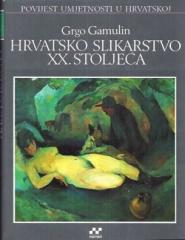
Hrvatsko slikarstvo XX. stoljeća, Svezak prvi

Hrvatsko slikarstvo XX. stoljeća, Svezak prvi

Grgo Gamulin

The first volume of Croatian Painting of the 20th Century by Grga Gamulin provides an overview of Croatian fine art from the Art Nouveau period to the interwar period, analyzing key authors and artistic movements.

Naprijed, 1987.
Croatian. Latin alphabet. Paperback.
33.26
Umjetnost na tlu Jugoslavije: renesansa u Hrvatskoj i Sloveniji

Umjetnost na tlu Jugoslavije: renesansa u Hrvatskoj i Sloveniji

Radovan Ivančević, Kruno Prijatelj, Anđela Horvat, Nace Šumi

The book shows how the Renaissance in Croatia and Slovenia was not just a copy of Italian models, but an original synthesis of domestic and foreign influences, making it an important part of European artistic heritage.

Jugoslavija, 1985.
Croatian. Latin alphabet. Hardcover.
8.40