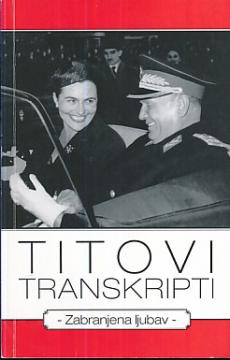
Titovi transkripti : zabranjena ljubav

Titovi transkripti : zabranjena ljubav

Alen Galović, Boris Rašeta

The book explores political relations in Yugoslavia, shows the internal dynamics of the government and offers an insight into the dilemmas and decisions of the time.

The main theme of the book focuses on a specific event or series of conversations from 1975, the context of which the author connects with the political or social controversies of that time. The term "forbidden love" can be metaphorical, symbolizing complex relationships within the political elite, conflicts of interest, or deeply personal and private aspects of political life.

Editor
Alen Galović
Graphics design
Jurica Galoić
Dimensions
19.5 x 13 cm
Pages
175
Publisher
24 sata, Zagreb
 
Latin alphabet. Paperback.
Language: Croatian.

One copy is available

Condition:Used, excellent condition
 

Are you interested in another book? You can search the offer using our search engine or browse books by category.

You may also be interested in these titles

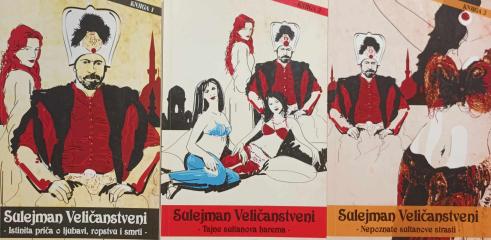
Sulejman Veličanstveni 1-3

Sulejman Veličanstveni 1-3

Alen Galović

In the book about Suleiman, you will discover everything about the Croat at Suleiman's court who was the first to find out about the sultan's secret slave girl and their fatal love.

24 sata, 2012.
Croatian. Latin alphabet. Paperback.
The book consists of 3 volumes
8.94
Doživljaji i putovanja do slobode

Doživljaji i putovanja do slobode

Vladimir Novak

The autobiographical work of Croatian communist activist Vladimir Novak, a survivor of the Ustasha camps, follows his memories of resistance to fascism during World War II.

August Cesarec, 1979.
Croatian. Latin alphabet. Hardcover with dust jacket.
8.266.20
Zaraćeno poraće: Konfliktni i konkurentski narativi o stradanju i iseljavanju Talijana Istre

Zaraćeno poraće: Konfliktni i konkurentski narativi o stradanju i iseljavanju Talijana Istre

Franko Dota

The book analyzes how conflicting historical narratives about the suffering and mass emigration of Italians from Istria and Rijeka developed in Croatia and Italy after World War II (1943–1956), debunking myths and encouraging an empathetic approach to the

Srednja Europa, 2010.
Croatian. Latin alphabet. Paperback.
11.328.49
Titostalgija

Titostalgija

Mitja Velikonja

The author explores why Tito remains a popular symbol of stability, social security and independence, despite critical views of his regime. The book maps the cultural, political and everyday manifestations of "Titostalgia".

Biblioteka XX vek, 2010.
Serbian. Latin alphabet. Paperback.
7.36
Umiruće tijelo politike: Rat - konstitucija nacionalnog tijela

Umiruće tijelo politike: Rat - konstitucija nacionalnog tijela

Senadin Musabegović

The philosophical and theoretical study by a Bosnian-Herzegovinian author analyzes how the war in Bosnia and Herzegovina from 1992 to 1995 was a biopolitical project of creating a "pure" national body through the systematic killing, expulsion, and rape of

Buybook, 2019.
Croatian. Latin alphabet. Paperback.
11.248.43