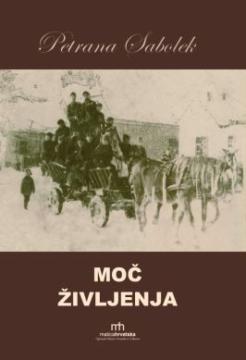
Moć življenja

Moć življenja

Petrana Sabolek

The Kajkavian novel depicts the coming-of-age of a six-year-old girl in Međimurje, offering authentic memories of rural life, hard labor, the resilience of the local people, and the preservation of traditional and linguistic heritage.

The novel Moć življenja (originally titled Moč življenja) by the Čakovec-based writer Petrana Sabolek—published in 2024 by the Čakovec branch of Matica hrvatska—marks her first novel written in the Kajkavian dialect of the Međimurje region. Told from the perspective of a six-year-old girl who moves from the big city to the village of Donji Kraljevec, the novel offers a unique insight into the daily rural life, customs, and mindset of Međimurje in the last century. Through the lens of childhood curiosity and sincerity, the author captures memories of her childhood, traditions, and the forgotten stories of her native region. The work’s central theme is the tireless and awe-inspiring vitality of ordinary village folk who, through ceaseless labor and sacrifice, contended with life's many hardships. Written in an authentic and rich local dialect, the book blends nostalgia, warmth, and ethnographic significance, serving as a precious tribute to the language and culture of Međimurje. Through vivid descriptions of family dynamics and the village community, Moć življenja celebrates the resilience, the joy of creation, and the unyielding spirit of the people of Međimurje, making it a deeply moving and valuable contribution to local literature.

Editor
Petrana Sabolek
Illustrations
Vilko Šercer
Dimensions
24.5 x 17.5 cm
Pages
176
Publisher
Matica hrvatska, Čakovec, 2024.
 
Distribution: 300 copies
 
Latin alphabet. Paperback.
Language: Croatian.

One copy is available

Condition:Used, excellent condition
 

Are you interested in another book? You can search the offer using our search engine or browse books by category.

You may also be interested in these titles

Istra i njeni razvojni putovi

Istra i njeni razvojni putovi

Juraj Pađen, Stanko Žuljić

The book Istria and its Development Paths from 1973, edited by Juraj Pađen and Stanko Žuljić, is a comprehensive analysis of the economic and social development of Istria in the context of the then Yugoslavia.

Ekonomski institut, 1973.
Croatian. Latin alphabet. Paperback.
7.50
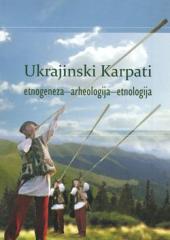
Ukrajinski Karpati: Etnogeneza, arheologija, etnologija

Ukrajinski Karpati: Etnogeneza, arheologija, etnologija

The collection is an interdisciplinary bridge between Ukrainian and Croatian science, encouraging comparative research on Slavic migrations. It presents the Carpathians as a "living archipelago" connecting East and West, important for Croatian ethnogenesi

Filozofski fakultet Sveučilišta u Zagrebu, 2014.
Croatian. Latin alphabet. Paperback.
18.34
Albanci u Osijeku i grad Osijek

Albanci u Osijeku i grad Osijek

Zajednica Albanaca u Republici Hrvatskoj, 1997.
Croatian. Latin alphabet. Paperback.
3.66
Rječnik šatrovačkog govora

Rječnik šatrovačkog govora

Tomislav Sabljak

The Dictionary of Šatrovci Speech is a pioneering lexicographic work documenting Šatrovci speech, a specific form of Croatian jargon. This is a key work for the study of Croatian jargon and its cultural role.

Globus, 1981.
Croatian. Latin alphabet. Hardcover with dust jacket.
7.56
Proizvodnja pokljuka u Požeškom Novom Selu: Separat

Proizvodnja pokljuka u Požeškom Novom Selu: Separat

Zdenka Lechner

Zdenka Lechner, the first ethnologist at the Museum of Slavonia (1951–1965), made significant contributions to the study of the traditional culture of Slavonia, including the use of pokljuc – earthen lids for baking bread and pastries on the hearth.

Muzej Slavonije, 1962.
Croatian. Latin alphabet. Paperback.
6.32