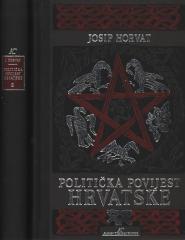
Politička povijest Hrvatske (1918. – 1929.)
Horvat examines Croatian politics from Austria-Hungary’s collapse and the creation of the Kingdom of Serbs, Croats and Slovenes to the 1929 dictatorship, tracing party conflicts and Radić’s movement.
Josip Horvat’s Politička povijest Hrvatske (1918.–1929.) examines the first decade of Croatian political life within the new South Slav state. Beginning with Austria-Hungary’s collapse, the National Council and unification in 1918, it follows the negotiations, disappointments and conflicts that shaped the Kingdom of Serbs, Croats and Slovenes.
Central themes include the Croatian question and competing visions of the state, Stjepan Radić’s peasant movement, relations with political parties in Belgrade and shifting alliances. Horvat connects political programmes with the personalities promoting them, parliamentary struggles and governmental pressure. The account culminates in the parliamentary crisis and the establishment of dictatorship in 1929.
His journalistic background lends the narrative immediacy and sensitivity to political atmosphere. Beyond chronology, he seeks to explain individual motives, decisions and their consequences.
Published in 1938, this edition is also an interwar interpretation of a still-recent past. As the second volume of a larger history, it offers a valuable perspective on Croatian politics, tensions within the first Yugoslav state and the historical outlook of a liberal journalist.
Multiple copies are available
Copy number 1
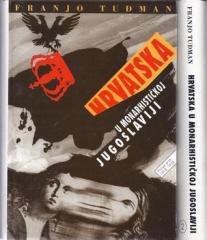
- Stains on cover
- Traces of patina
Copy number 4
- Traces of patina