Lodovico Ariosto

Where do the wits you lose on Earth end up? On the Moon, if you ask Ludovico Ariosto (1474–1533). When his knight Orlando learns that Angelica has married Medoro, he loses his mind. Astolfo goes looking for it and finds it in a flask among the things lost on Earth. The episode catches Ariosto’s way of telling a story: he carries a chivalric adventure into the realm of wonders, then brings the reader back to human failings with a single comic detail.
Born in Reggio Emilia, Ariosto studied law in Ferrara before devoting himself to literature. He served at the court of the Este family, first under Cardinal Ippolito and then under Duke Alfonso I. From 1522 to 1525 he governed Garfagnana. Court service, obligations to patrons and a longing for a quiet life all found their way into his Satire, seven verse epistles written in terza rima.
In Orlando furioso, Ariosto continues the story Matteo Maria Boiardo began in Orlando innamorato. Charlemagne’s war, Orlando’s love for Angelica, and the story of Ruggiero and Bradamante keep crossing paths. Ariosto’s narrator will leave a knight in mid-adventure and pick up another thread just when the reader wants to know what happens next. The first edition, published in 1516, had 40 cantos. Ariosto revised it in 1521 and expanded it to 46 cantos for the final edition of 1532.
His comedies La cassaria and I suppositi show how the forms of classical comedy could be brought into the world of Renaissance cities. The complete epic is available in Croatian as Bijesni Orlando, translated by Danko Anđelinović. From courtly obligations in the Satire to the search for lost wits on the Moon, Ariosto has a keen eye for the point at which human ambitions become ridiculous.
Naslovi u ponudi
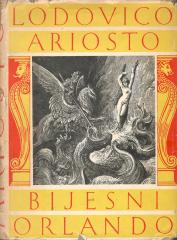
Bijesni Orlando
Orlando loses his reason when he discovers Angelica loves another, amid interwoven wars, romantic quests and marvellous adventures in a world of Renaissance chivalry.