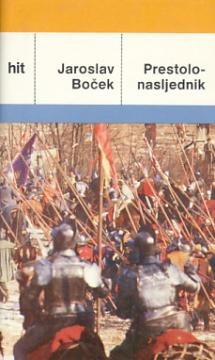
Prestolonasljednik

Prestolonasljednik

Jaroslav Boček

It is a historical novel that follows the life of Rudolf of Habsburg, later Emperor Rudolf II. The story takes place in the 16th century, during a time of religious and political tensions between Catholicism and Protestantism in the Austro-Hungarian lands

Rudolf, raised at the Spanish court, arrives in Prague as a young heir to the throne, bringing with him Spanish culture and Catholic tradition, which causes conflicts with the Czech nobility and the growing Protestant movement.

The novel explores Rudolf's complex personality - his penchant for art, science and the occult, but also his inability to cope with political challenges. Through his relationships with courtiers, artists such as Tycho Brahe and family, Boček depicts the internal and external conflicts that shape Rudolf's life. The plot also deals with his fascination with alchemy and astrology, which makes him an eccentric ruler in the eyes of his contemporaries.

Boček combines historical fact with fiction, creating a rich picture of the Habsburg monarchy and social turmoil. The novel is distinguished by its detailed descriptions of court life, political intrigue and cultural flourishing, but also by its criticism of rigid social structures. Rudolf's struggle between personal passions and royal duty forms the core of the story, offering insight into the tragedy of a great but unfortunate figure.

Naslov izvornika
Čas korrunniho prince
Prijevod
Anka Katušić Balen
Urednik
Zlatko Crnković
Naslovnica
Alfred Pal
Dimenzije
19,5 x 12 cm
Broj strana
446
Nakladnik
Znanje, Zagreb, 1990.
 
Latinica. Tvrde korice s ovitkom.
Jezik: Hrvatski.

Dva primjerka su u ponudi

Primjerak broj 1

Stanje:Korišteno, u odličnom stanju
Dodano u košaricu!

Primjerak broj 2

Stanje:Korišteno, u odličnom stanju
Oštećenja / nepogodnosti:
  • The cover is missing
Snižena cijena: 4,983,74
Popust od 25% vrijedi do 02.07.2026. 23:59
Dodano u košaricu!
 

Zanima Vas i neka druga knjiga? Možete pretražiti našu ponudu pomoću tražilice ili prelistati knjige po kategorijama.

Možda će Vas zanimati i ovi naslovi

Rakova djeca

Rakova djeca

Pavao Pavličić

Rakov's children are a tense read in which the editor of the black chronicle, Ivo Remetin, visits a friend who died in a traffic accident and becomes involved in an intriguing search for the killer of cancer patients.

Znanje, 1988.
Hrvatski. Latinica. Tvrde korice s ovitkom.
5,32
Ljubavlju opsjednuti

Ljubavlju opsjednuti

Terje Stigen

Obsessed with Love by Terje Stigen is a novel about a love affair that gradually turns into an obsession. Through conflicts, jealousy, and emotional dependence, it depicts the destructive power of uncontrolled passion.

Znanje, 1975.
Hrvatski. Latinica. Tvrde korice s ovitkom.
3,98
Kako to reći Liddy: jetka komedija

Kako to reći Liddy: jetka komedija

Anne Fine

Imagine four sisters who share everything from shopping marathons and family dinners to the most intimate secrets. Heather, Bridie, Stella and Liddy Palmer – unbreakable, loyal, impenetrable. Or so they think...

Znanje, 1998.
Hrvatski. Latinica. Broširano.
3,46
Plavi bicikl

Plavi bicikl

Regine Deforges

The Blue Bicycle by Régine Deforges is a historical romance novel set in France during World War II. The main character, Léa Delmas, goes through the horrors of war, romantic conflicts, and personal maturation.

Znanje, 1987.
Hrvatski. Latinica. Tvrde korice s ovitkom.
3,36 - 3,42
Konačna dijagnoza

Konačna dijagnoza

Arthur Hailey

Arthur Hailey's Final Diagnosis is a medical novel set in a large hospital. Through the fates of doctors and patients, it depicts responsibility, professional errors, and the conflict between tradition and progress in medicine.

Znanje, 1972.
Hrvatski. Latinica. Tvrde korice s ovitkom.
4,42
Kako biti stranac

Kako biti stranac

George Mikes

How to Be a Foreigner by George Mikes is a humorous book in which the author, as an immigrant from Hungary, humorously describes British customs, mentality, and everyday life from the perspective of a foreigner.

Znanje, 1980.
Hrvatski. Latinica. Tvrde korice s ovitkom.
5,42