Titostalgija

Titostalgija

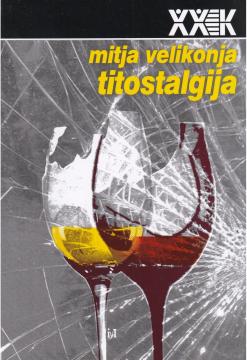
Mitja Velikonja

The author explores why Tito remains a popular symbol of stability, social security and independence, despite critical views of his regime. The book maps the cultural, political and everyday manifestations of "Titostalgia".

Titostalgia – a study of nostalgia for Josip Broz is a socio-cultural study by Slovenian professor Mitja Velikonja, one of the leading researchers of post-socialist nostalgia and Yugonostalgia. The author does not deal with Tito's biography or his historical role, but with the phenomenon of posthumous nostalgia – “Titostalgia” – that emerged after the breakup of Yugoslavia in 1991 and the transitional crises of the 1990s.

The book is structured in five chapters plus an introduction, conclusion and bibliography: the introduction “Josip Broz is good all the way” (inspired by everyday examples such as Tito's picture on sugar in a cafe), mapping nostalgia and research approaches, the culture of Titostalgia (Tito as a living legend), manifestations in popular culture, politics, media and everyday life, and an analysis of the reasons why Tito remains a positively symbolic figure for many (stability, social justice, independence from blocs, prosperity).

Velikonja distinguishes titostalgia from classical nostalgia: it is not just a memory of the past, but a reinterpretation and idealization – younger generations who did not live in Yugoslavia show nostalgia for “better times”. The phenomenon is present in all ex-YU republics, but with different intensity (stronger in Serbia, Bosnia, Montenegro; more subtle in Slovenia and Croatia). The book uses empirical examples: graffiti, souvenirs, music, films, political campaigns, polls and media discourses.

The style is academic, but accessible – critical of simplifications (e.g. that titostalgia is just manipulation or retro-communism), emphasizes its emancipatory potential as a critique of transitional capitalism, poverty and loss of social security. It is one of the key books on Yugonostalgia, influencing further research (e.g. on rock, art, media).

Naslov originala
Titostalgija. Študija nostalgije po Josipu Brozu
Prevod
Branka Dimitrijević
Urednik
Ivan Čolović
Naslovnica
Ivan Mesner
Dimenzije
16,5 x 11,5 cm
Broj strana
182
Izdavač
Biblioteka XX vek, Beograd, 2010.
 
Latinica. Broširano.
Jezik: Srpski.

Jedan primerak je u ponudi

Stanje:Nekorišćeno
Dodato u korpu!
 

Zanima Vas i neka druga knjiga? Možete pretražiti našu ponudu pomoću pretrage ili prelistati knjige po kategorijama.

Možda će Vas zanimati i ovi naslovi

Riječka država: od Londonskog pakta i Danuncijade do Rapalla i aneksije Italiji

Riječka država: od Londonskog pakta i Danuncijade do Rapalla i aneksije Italiji

Ferdo Čulinović

A historical and political monograph by Ferdo Čulinović (1897–1971), a prominent Croatian legal historian, about the turbulent history of Rijeka from 1915 to 1924, with an emphasis on the Italian occupation and the Treaty of Rapallo.

Školska knjiga, 1953.
Hrvatski. Latinica. Tvrde korice.
12,42
Hrvatska politička povijest od Khuena do Rapalla

Hrvatska politička povijest od Khuena do Rapalla

Angjelo Gjurski

The work depicts the political development of Croatia from the period of Khuen-Héderváry's rule to the Treaty of Rapallo, analyzing key conflicts, national processes, and relations within the Monarchy and the Kingdom of SHS.

Hrvatska politička biblioteka, 1938.
Hrvatski. Latinica. Tvrde korice.
8,32
Almanah Jadranske straže za 1926. godinu

Almanah Jadranske straže za 1926. godinu

The Adriatic Guard Almanac for 1926 contains texts about the Adriatic 1915–1925, war experiences, the historical role of the army, a royal visit to the coast, and studies on Tomislav and Croatian monuments. The collection is a cultural and patriotic overv

Jadranska straža, 1927.
Hrvatski. Latinica. Tvrde korice.
42,36
Politika sporazuma: dnevničke beleške 1939-1941, londonske beleške 1944-1945

Politika sporazuma: dnevničke beleške 1939-1941, londonske beleške 1944-1945

Mihailo Konstantinović

The generation to which Konstantinović belonged managed to reach an agreement and, had it not been for the Second World War, was on the threshold of establishing liberal democracy in Yugoslavia, whose supporter Konstantinović was.

Agencija Mir, 1998.
Srpski. Latinica. Tvrde korice.
39,99
Baranja 1941-1945

Baranja 1941-1945

Nada Lazić

The monograph "Baranja 1941–1945" is the first systematic study of the history of Baranja during World War II. A detailed account of the Hungarian occupation, terror, resistance and liberation of this area.

Historijski institut Slavonije, 1979.
Hrvatski. Latinica. Tvrde korice.
9,347,01 - 9,367,02
Jevreji u Jugoslaviji 1944–1952: Kraj ili novi početak

Jevreji u Jugoslaviji 1944–1952: Kraj ili novi početak

Mladenka Ivanković

Jews in Yugoslavia 1944–1952 by Mladenka Ivanković depicts the renewal of the life of the Jewish community after the Holocaust, its relationship with the new authorities, and emigration to Israel and the preservation of identity.

Institut za noviju istoriju Srbije, 2009.
Srpski. Latinica. Tvrde korice.
36,42