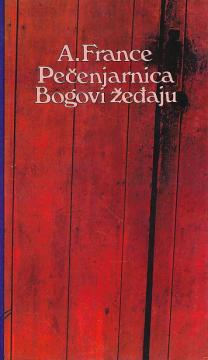
Pečenjarnica / Bogovi žeđaju

Pečenjarnica / Bogovi žeđaju

Anatole France

In the novels The Oven and Gods Thirst, Anatole France shows the path from reason and humanism to fanaticism, criticizing social prejudices, dogmatism and abuse of power.

The novels Pečenjarnica and Gods thirst are among the most significant works of the French writer Anatole France, winner of the Nobel Prize for Literature. Although they are set in different historical periods, both novels are connected by the author's criticism of society, fanaticism and blind acceptance of authority.

In Pečenjarnica, we follow the growth of Jakov Menetrie who, under the influence of the learned priest Jérôme Coignard, learns about philosophy, literature and science and develops critical thinking. The novel is imbued with humor, irony and a satirical depiction of human weaknesses, and emphasizes the importance of reason, education and tolerance.

In contrast, Gods thirst depicts the dark side of human nature through the character of the painter Évariste Gamelin, who during the French Revolution turns from an idealist into a fanatical judge of the Revolutionary Court. Believing that he serves justice, he gradually loses compassion and turns into a perpetrator of terror, only to eventually become a victim of the system he served.

Both novels explore the relationship between the individual and society and warn of the dangers of dogmatism, political and religious extremism, and abuse of power. France combines historical themes with philosophical reflections, showing that humanity, freedom of thought and a critical attitude towards authorities are the fundamental values ​​of every society. His works remain relevant because they warn that fanaticism can arise at any time when reason gives way to blind ideology.

Titel des Originals
La Rôtisserie de la reine Pédauque / Les dieux ont soif
Übersetzung
Branka Hergešić, Ivo Hergešić
Editor
Ivo Hergešić
Titelseite
Alfred Pal
Maße
21 x 12,5 cm
Seitenzahl
416
Verlag
Sveučilišna naklada Liber (SNL), Zagreb, 1977.
 
Auflage: 7.000 Exemplare
 
Latein Schrift. Fester Einband mit Schutzumschlag.
Sprache: Kroatisch.

Es werden zwei Exemplare angeboten

Kopiennummer 1

Zustand:Gebraucht, in ausgezeichnetem Zustand
Zum Warenkorb hinzugefügt!

Kopiennummer 2

Zustand:Gebraucht, in ausgezeichnetem Zustand
Nachteile/Unannehmlichkeiten:
  • Traces of patina
Zum Warenkorb hinzugefügt!
 

Interessieren Sie sich für ein anderes Buch? Sie können das Angebot über unsere Suchmaschine suchen und finden oder Bücher nach Kategorien durchsuchen.

Diese Titel könnten Sie auch interessieren

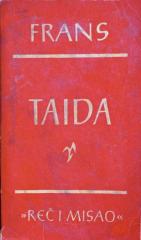
Taida: roman iz aleksandrijskih vremena

Taida: roman iz aleksandrijskih vremena

Anatole France

The novel Taida, published in 1890, is one of the most famous works by French Nobel Prize winner Anatole France. The work is inspired by the legend of Saint Taida of Egypt, a 4th-century courtesan who converted to Christianity.

Rad, 1961.
Serbisch. Latein Schrift. Taschenbuch.
1,99
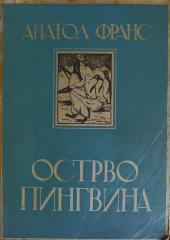
Ostrvo pingvina

Ostrvo pingvina

Anatole France
Kultura, 1946.
Serbisch. Kyrillisch Schrift. Taschenbuch.
3,99
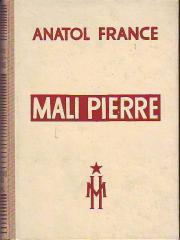
Mali Pjer

Mali Pjer

Anatole France
Novo pokolenje, 1950.
Serbisch. Kyrillisch Schrift. Taschenbuch mit Einband.
2,99
Robin Hood

Robin Hood

Alexandre Dumas

Dumas porträtiert Robin Hood nicht nur als Banditen, der den Armen hilft, sondern auch als heldenhaften Kämpfer für Gerechtigkeit und Symbol des Widerstands gegen feudale Ungerechtigkeit.

Epoha, 1966.
Kroatisch. Latein Schrift. Fester Einband mit Schutzumschlag.
4,26 - 4,82
Svilena klopka

Svilena klopka

Françoise Sagan

In „Die Seidenfalle“ schildert Françoise Sagan eine Liebesfalle, gesponnen aus Leidenschaft, Ironie und Selbsttäuschung. Adrian, ein zynischer Schriftsteller, ist gefangen zwischen Erfolg, Langeweile und einer geheimnisvollen Frau, die seine Lebenseinstel

Mladost, 1990.
Kroatisch. Latein Schrift. Fester Einband mit Schutzumschlag.
4,983,98 - 7,36
Ljubičice u srijedu

Ljubičice u srijedu

Andre Maurois

André Maurois, ein französischer Schriftsteller, der für seine psychologischen Romane und Biografien bekannt ist, behandelt in diesem für seinen Stil charakteristischen Werk Themen wie Familienbeziehungen, Liebe und innere Konflikte.

Svjetlost, 1965.
Kroatisch. Latein Schrift. Taschenbuch.
3,42 - 3,62