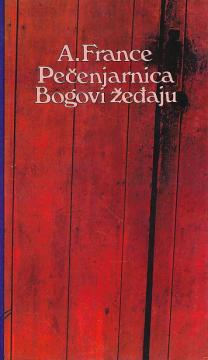
Pečenjarnica / Bogovi žeđaju
In the novels The Oven and Gods Thirst, Anatole France shows the path from reason and humanism to fanaticism, criticizing social prejudices, dogmatism and abuse of power.
The novels Pečenjarnica and Gods thirst are among the most significant works of the French writer Anatole France, winner of the Nobel Prize for Literature. Although they are set in different historical periods, both novels are connected by the author's criticism of society, fanaticism and blind acceptance of authority.
In Pečenjarnica, we follow the growth of Jakov Menetrie who, under the influence of the learned priest Jérôme Coignard, learns about philosophy, literature and science and develops critical thinking. The novel is imbued with humor, irony and a satirical depiction of human weaknesses, and emphasizes the importance of reason, education and tolerance.
In contrast, Gods thirst depicts the dark side of human nature through the character of the painter Évariste Gamelin, who during the French Revolution turns from an idealist into a fanatical judge of the Revolutionary Court. Believing that he serves justice, he gradually loses compassion and turns into a perpetrator of terror, only to eventually become a victim of the system he served.
Both novels explore the relationship between the individual and society and warn of the dangers of dogmatism, political and religious extremism, and abuse of power. France combines historical themes with philosophical reflections, showing that humanity, freedom of thought and a critical attitude towards authorities are the fundamental values of every society. His works remain relevant because they warn that fanaticism can arise at any time when reason gives way to blind ideology.
Two copies are available
Copy number 2
- Traces of patina