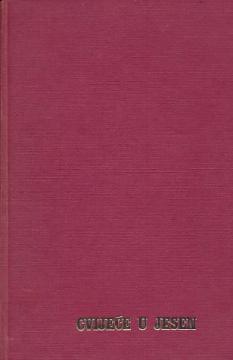
Cvijeće u jesen

Cvijeće u jesen

Ivan Tavčar

"Flowers in Autumn" is a novella by Slovenian writer Ivan Tavčar, first published in 1917. The work belongs to Slovenian literary realism and is considered one of the most significant achievements of that period.

The plot follows Janez, a successful lawyer from Ljubljana, who, dissatisfied with the monotony of city life, decides to visit his cousin in the countryside. There he meets Meta, a simple and hardworking country girl. Despite their differences in origin and lifestyle, a sincere love develops between them. Janez, enchanted by the beauty of nature and the simplicity of village life, decides to leave the city and start a new life with Meta in the countryside.

Through this story, Tavčar explores themes such as the conflict between urban and rural lifestyles, love that transcends social barriers, and the transience of time. The title "Flowers in Autumn" symbolizes the beauty and love that blooms even in the later stages of life, emphasizing that it is never too late to change and find happiness.

The novel was adapted into a film of the same name in 1973, directed by Matjaž Klopčič, starring Poldet Bibič and Milena Zupančič. The film retained the essence of the original story, depicting the beauty of the Slovenian countryside and the universality of the love story.

"Flowers in Autumn" remains an enduring work of Slovenian literature, providing readers with insight into the cultural and social aspects of Slovenia at the beginning of the 20th century and the universal themes of love, change, and acceptance.

Naslov originala
Cvetje v jeseni
Prevod
Mirjana Hećimović, Ladislav Žimbrek
Urednik
Franček Bohanec
Dimenzije
20,5 x 13,5 cm
Broj strana
195
Izdavač
Spektar, Zagreb, 1974.
 
Latinica. Tvrde korice.
Jezik: Hrvatski.

Nema primeraka u ponudi

Poslednji primerak je nedavno prodat.
 

Zanima Vas i neka druga knjiga? Možete pretražiti našu ponudu pomoću pretrage ili prelistati knjige po kategorijama.

Možda će Vas zanimati i ovi naslovi

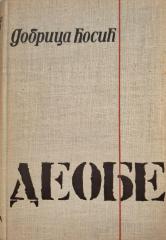
Deobe 1-3

Deobe 1-3

Dobrica Ćosić

This work, awarded the NIN Prize for that year, is considered one of the most significant in Serbian literature after World War II.

Prosveta, 1961.
Srpski. Ćirilica. Tvrde korice s omotom.
Knjiga se sastoji od tri toma
11,42
Tri mušketira 1-2

Tri mušketira 1-2

Alexandre Dumas

Dumas' version of the story depicts the adventures of d'Artagnan and his friends from 1625 to 1628.

Epoha, 1966.
Hrvatski. Latinica. Tvrde korice s omotom.
Knjiga se sastoji od dva toma
9,48
Pisma

Pisma

Ljubomir Nenadović
Nolit, 1966.
Srpski. Latinica. Broširano.
3,90
Malena je ime tanga

Malena je ime tanga

Almudena Grandes

Ako volite sirovu erotičnost poput Atlasa oblaka, ovo je senzualna saga – emotivna, provokativna, za one koji žele osjetiti puls zabranjene strasti! Grandes sondira je li ljubav prokletstvo ili oslobođenje?

Mozaik knjiga, 2000.
Hrvatski. Latinica. Tvrde korice.
7,96 - 8,54
Doba života, doba smrti / Slavoluk pobjede / Ljubi bližnjega svoga

Doba života, doba smrti / Slavoluk pobjede / Ljubi bližnjega svoga

Erich Maria Remarque

Izabrana Remarkova dela u tri toma.

SKD Prosvjeta, 1963.
Hrvatski. Latinica. Tvrde korice.
Knjiga se sastoji od tri toma
14,32
Zagrepčanka

Zagrepčanka

Branislav Glumac

Branislav Glumac 1974. objavljuje roman bez točaka i zareza, kao neumoljivi tok misli mlade buntovnice. Objavljen u socijalističkoj Jugoslaviji, djelo je izazvalo skandal svojom otvorenošću i postalo klasik o generacijskom buntu.

IROS, 1986.
Hrvatski. Latinica. Tvrde korice.
8,24