Ruski prozor

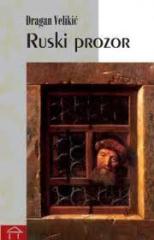
Ruski prozor

Dragan Velikić

Perhaps the greatest virtue of Velikić's writing, which culminated in this novel, is his extraordinarily refined feeling for life's details, which he depicts and evokes with an almost shamanic power of materialization.

In the novel Russian Window, Dragan Velikić creates a three-part "omnibus novel" about exile, questioning identity and the transience of life. The first chapter is narrated by Danijel, an aging conductor who introspectively questions his own destiny; the second forms the core of the narrative, following Rudi Stupar, a Vojvodina native and an unsuspecting actor, who flees Belgrade in the chaos of the nineties and passes through Budapest, Hamburg and other European centers. The final, third part consists of a series of short confessions by other characters, who comment on Rudi's life and leave him in a different light. Through a complex narrative structure - fragmented memories and asymmetrical narrative units - Velikić builds an atmosphere of melancholic reflection, where Russian Window represents a "photo point": a small depiction of life, a cross-section of inner aspirations and memories. The style is refined and precise, often poetic, so the prose balances between intellectual essay and intimate confession. The themes touch on exile, the search for a spiritual home, and the establishment of a balance between personal destiny and the broader historical dynamics. Throughout his wandering existence, Rudi carries an introspective burden of nostalgia and failure, at the same time imbued with humor and self-irony as a resistance against petty-bourgeois fate. The novel was awarded the prestigious NIN and Meša Selimović, and has also received recognition from critics in the region and abroad. Critics emphasize its "methodical play" between individual and collective history, intertwined with spiritual and emotional warmth.

Editor
Drago Glamuzina
Maße
19,5 x 14,5 cm
Seitenzahl
322
Verlag
Profil International, Zagreb, 2008.
 
Latein Schrift. Taschenbuch.
Sprache: Kroatisch.

Angeboten wird ein Exemplar

Zustand:Gebraucht, in ausgezeichnetem Zustand
Zum Warenkorb hinzugefügt!
 

Interessieren Sie sich für ein anderes Buch? Sie können das Angebot über unsere Suchmaschine suchen und finden oder Bücher nach Kategorien durchsuchen.

Diese Titel könnten Sie auch interessieren

Ruski prozor

Ruski prozor

Dragan Velikić
Stubovi kulture, 2008.
Serbisch. Latein Schrift. Taschenbuch.
7,565,67
Danteov trg

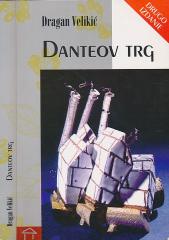
Danteov trg

Dragan Velikić

As in Velikić's previous novels, the heroes weave analogous and often intertwined destinies of frustrated Central European citizens and intellectuals, the topography is very diverse, but also recognizable.

Stubovi kulture, 1998.
Serbisch. Latein Schrift. Taschenbuch.
6,72
Stotina godina (antikronika)

Stotina godina (antikronika)

Dario Harjaček

Der Roman „Hundert Jahre“ von Dario Harjaček bietet einen Panoramablick auf Trešnjevka und seine Bewohner im Laufe eines Jahrhunderts voller Veränderungen, Ideologien und menschlicher Schicksale – ein Mosaik von Zagreb, in dem Leben, Kunst und Geschichte

Oceanmore, 2025.
Kroatisch. Latein Schrift. Taschenbuch.
13,42
Dok ležah na samrti

Dok ležah na samrti

William Faulkner

Faulkners Roman aus dem Jahr 1930 ist ein klassisches Beispiel modernistischer Literatur. Aufgrund seiner innovativen Struktur wird er oft mit Joyces „Ulysses“ verglichen, ist aber aufgrund seines Fokus auf die Familie zugänglicher.

Rad, 1985.
Kroatisch. Latein Schrift. Taschenbuch.
3,26
Proces

Proces

Franz Kafka

Kafka schrieb „Der Prozess“ zwischen 1914 und 1915 und veröffentlichte es posthum im Jahr 1925. Der Roman ist unvollendet, wurde aber um ein letztes Kapitel von Max Brod ergänzt. Ausgabe mit einem Vorwort von B. Živojinović und einem Nachwort von Walter K

BIGZ, 1990.
Serbisch. Latein Schrift. Taschenbuch.
4,26
Andrićeva lestvica užasa

Andrićeva lestvica užasa

Svetislav Basara

Der serbische Schriftsteller Ivo Andrić, bekannt für seine satirischen Romane, seziert in „Die Leiter des Schreckens“ die Mentalität des Balkans anhand einer Parabel über Jugoslawien-Nostalgie und nationale Mythen. Der Titel spielt darauf an, dass Andrić

24 sata, 2021.
Serbisch. Latein Schrift. Taschenbuch.
11,56