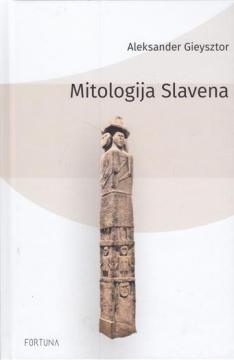
Mitologija Slavena
Najuticajnija studija o verskim verovanjima starih Slovena pre hristijanizacije. Sintetički prikaz slovenske mitologije kroz rekonstrukciju verovanja, božanstava i društvenih struktura, zasnovan na istorijskim izvorima i arheološkim tragovima.
Autor povezuje istorijske izvore, lingvistiku, etnologiju i arheologiju kako bi rekonstruisao duhovni svet starih Slovena. Umesto romantičnog pokušaja izgradnje sistematske strukture panteona, Giještor pažljivo analizira fragmente tradicije koji su preživeli u hronikama, ritualima i folkloru.
Centralni deo knjige posvećen je najvažnijim božanstvima: Perunu kao bogu groma i nebeskog poretka, Velesu kao njegovom rivalu i gospodaru podzemlja, i raznim regionalnim božanskim figurama čija se imena i funkcije razlikuju među slovenskim grupama. Autor pokazuje kako se mitološki model zasniva na suprotstavljenim principima neba i zemlje, reda i haosa, suše i vode – bipolarnom strukturnom obrascu koji oblikuje i mit i društveni poredak.
Giještor takođe istražuje kult predaka, demonološke figure, sakralnu topografiju (šume, izvori, gajevi) i ritualne prakse koje su se nastavile nakon prihvatanja hrišćanstva. Knjiga takođe razmatra kontinuitete u narodnoj kulturi, uključujući godišnje rituale, simboliku biljaka i životinja i ulogu magijskih formula.
Uvod Karola Modzelevskog smešta delo u širi okvir istraživanja srednjovekovne slovenske kulture, dok pogovor Lešeka P. Slupeckog ističe uticaj Giještorovog pristupa u modernim slavističkim studijama. Urednica Aneta Pieniadz daje urednički kontekst i dodatke.
Celina dela predstavlja fundamentalni priručnik za razumevanje slovenske mitske imaginarnosti, od koje su sačuvani samo fragmenti, ali koji su, kroz Giještorovu analitičku rekonstrukciju, transformisani u ubedljiv i koherentan prikaz verskog sistema ranih Slovena.
Nema primeraka u ponudi
Poslednji primerak je nedavno prodat.