Erich Maria Remarque
What is left of the speeches about glory that boys hear at school when one of them hears his first shell? In All Quiet on the Western Front (1929), Erich Maria Remarque (1898–1970) leaves the answer to Paul Bäumer, a young man who goes to the front with boys his own age. Life in the trenches determines what he eats, when he sleeps and whose name he will still be able to call tomorrow. From such everyday details came one of the most widely read anti-war novels of the twentieth century.
Remarque was born in Osnabrück as Erich Paul Remark. He served in the German army during the First World War and was wounded. After the war he worked as a journalist in Hanover and Berlin. His novel about the Western Front made him famous, and in 1933 the Nazis burned his books. He lived in Switzerland and the United States and died in Locarno.
The Road Back (1931) follows former soldiers trying to find their footing in civilian life. In Three Comrades, friendship and love give people something to hold on to in the unsettled years between the wars. Flotsam (1941) and Arch of Triumph portray refugees whose lives can turn on a border crossing, a police check or the lack of valid papers.
In A Time to Love and a Time to Die (Zeit zu leben und Zeit zu sterben, 1954), the German soldier Ernst Graeber comes home on leave from the Eastern Front to find his hometown bombed. While looking for his parents, he meets Elisabeth again. They grow close as the days before his return to the front run down.
From Bäumer’s trench to Graeber’s leave, Remarque follows people whose choices are narrowed by history. His novels are most intimate when a great historical upheaval comes down to an immediate question: where to spend the night, whom to trust and how much time you have left with someone you love.
Naslovi u ponudi

Izabrana djela 2: Povratak
Povratak prikazuje skupinu njemačkih vojnika koji se nakon Prvog svjetskog rata vraćaju kući i suočavaju s razorenim životima, beznađem i društvom koje ih više ne razumije. Roman prikazuje njihovu borbu za smisao u svijetu koji se nepovratno promijenio.
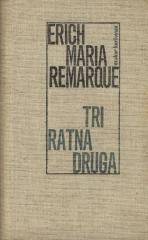
Izabrana djela 3: Tri ratna druga
Tri ratna druga iz Prvog svjetskog rata — Robbie, Otto i Gottfried — pokušavaju preživjeti u Weimarskoj Njemačkoj 1928. godine. Usred ekonomske krize, siromaštva i političkog nasilja, njihovo prijateljstvo je jedino utočište.

Izabrana djela 4: Ljubi bližnjega svoga
„Liebe deinen Nächsten“ schildert das Schicksal von Flüchtlingen, die vor dem Nationalsozialismus fliehen und in Europa Zuflucht suchen. Der Roman erzählt von Angst, Verfolgung, Liebe und dem Kampf um ein würdevolles Leben.

Izabrana djela 5: Trijumfalna kapija
Paris 1939. Der deutsche Arzt und Flüchtling Ravic lebt ohne Papiere und Heimat. Im Angesicht des heraufziehenden Krieges findet er die leidenschaftliche Liebe, aber auch die Gelegenheit zur Rache. Ein Klassiker über Exil und Menschlichkeit.

Izabrana djela 6: Iskra života
Iskra života prati skupinu logoraša u nacističkom koncentracijskom logoru koji, unatoč neprekidnom teroru, zadržavaju moralnu snagu i ljudskost. Roman prikazuje borbu duha protiv sustavnog uništenja i potrebu za nadom.

Izabrana djela 7: Doba života i doba smrti
Doba života i doba smrti prati njemačkog vojnika Ernsta Graebera koji tijekom Drugoga svjetskog rata dolazi na dopust i pokušava pronaći smisao života usred razaranja, ljubavi i moralnih dvojbi.

Izabrana djela 8: Crni obelisk
Crni obelisk prikazuje život u Njemačkoj nakon Prvog svjetskog rata. Mladi Ludwig Bodmer pokušava pronaći smisao života usred siromaštva, inflacije, političkih nemira i razočaranja.

Izabrana djela 9: Nebo ne zna za miljenike
Nebo ne zna za miljenike prati automobilskog vozača Clerfayta i teško bolesnu Lillian. Svjesni prolaznosti života, zajedno traže sreću, ljubav i slobodu prije nego što bude prekasno.

Izabrana djela 9: Nebo ne zna za miljenike
Heaven Knows No Favoritism follows the car driver Clerfayt and the seriously ill Lillian. Aware of the transience of life, together they seek happiness, love and freedom before it's too late.
