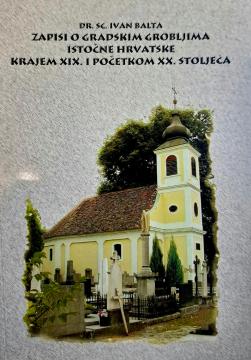
Zapisi o gradskim grobljima Istočne Hrvatske krajem XIX. i početkom XX. stoljeća
This scholarly paper explores the origins, development, and cultural-historical significance of urban cemeteries in eastern Croatia during the late 19th and early 20th centuries, through the lens of sepulchral heritage.
The work Records of Urban Cemeteries in Eastern Croatia in the Late 19th and Early 20th Centuries, by Prof. Ivan Balta, PhD, examines the history, urban development, and cultural heritage of cemeteries in eastern Croatia (Slavonia and Baranja) during a period of modernization and the region’s transformation into a bourgeois society. The author analyzes how cemeteries—previously situated next to churches within settlements—were relocated to the outskirts of towns during the 19th century, driven by sanitary reforms and new urban planning initiatives. Through surviving monuments, tombstones, sculptures, and epitaphs, Balta explores the artistic and stylistic value of sepulchral art (ranging from Historicism to Art Nouveau), while also shedding light on the multicultural nature and social stratification of the communities of that era (in Osijek, Vukovar, Vinkovci, Đakovo, and other towns). Particular attention is given to the biographies of notable citizens, craftspeople, intellectuals, and nobles buried in these cemeteries; in doing so, the work transcends a purely local scope, becoming a valuable contribution to the study of mentalities, daily life, and the urban history of continental Croatia at the turn of the century.
Jedan primjerak je u ponudi