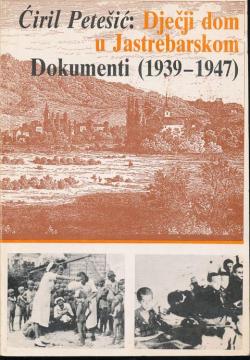
Dječji dom u Jastrebarskom: Dokumenti (1939-1947.)
Das Buch konzentriert sich auf die Zeit vom 12. Juli bis Anfang November 1942, als in Jastrebarsko ein Kinderlager für Kinder aus dem Lager Stara Gradiška und anderen Lagern in Jasenovac bestand.
Der Grund dafür liegt darin, dass in unserer Nachkriegspresse zahlreiche Artikel, Feuilletons und mehrere Bücher dieser Zeit gewidmet waren, eine kritische Darstellung der Ereignisse jedoch nicht erfolgte. Ein weiterer Grund liegt darin, dass die wichtigsten Dokumente nicht vollständig veröffentlicht wurden. Einige von ihnen wurden, wenn sie zitiert wurden, für den Zweck einer bestimmten Diskussion oder eines bestimmten Buches verwendet, nicht jedoch jene Teile der Dokumente, die den Dingen ein merklich anderes Licht verleihen. Der dritte Grund ist, dass zahlreiche „Erinnerungen“ veröffentlicht wurden, die 30-40 Jahre nach den Ereignissen in Jastrebarski während des Zweiten Weltkriegs entstanden. „Erinnerungen“ wurden größtenteils in Fragmenten veröffentlicht und sind dennoch zweitklassige (sekundäre) Dokumente. Aus diesen Gründen habe ich versucht, der Veröffentlichung der Primärdokumente in ihrer Gesamtheit größtmögliche Aufmerksamkeit zu schenken, und darin liegt meiner Meinung nach der Wert dieses Buches. Bis jetzt hatten die Leser keine Gelegenheit zu bemerken, dass die kurze Geschichte des Kinderheims in Jastrebarski mehrere Phasen hatte: die Vorkriegszeit, als Banovina Hrvatska ihr Heim für Waisenkinder gründete, die anfängliche Kriegszeit, bis zum Lager für Kinder aus den Jasenovac-Lagern Dem Kinderheim, das fast 4 Monate bestand, kam eine weitere Phase bis Kriegsende und eine Nachkriegsphase hinzu. Von besonderer Bedeutung war die Einrichtung eines Kinderkrankenhauses für Infektionskrankheiten, das nach dem Ende des Kinderlagers als Seuchenkrankenhaus weitergeführt wurde. Darüber hinaus gab es in Jastrebarski tatsächlich drei Kinderheime, und es handelte sich um staatliche Kinderheime, die unter der Obhut und Aufsicht der Banovina Hrvatska, des Ministeriums für NDH und nach dem Krieg der Republik Kroatien standen.
Im Angebot sind keine Exemplare vorhanden
Das letzte Exemplar wurde kürzlich verkauft.