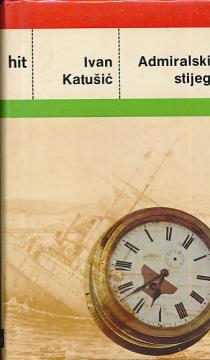
Admiralski stijeg
Ich definiere den Roman als neohistorisch, genau nach einem festgelegten Schema geschrieben wie andere neohistorische Romane; indem fiktive Charaktere und Ereignisse in einen bekannten, sachlichen, historischen Rahmen eingefügt werden.
Der Roman „Admiralski stijeg“ zeichnet sich durch eine Fülle metatextueller Elemente aus, die einen eigenen Zweck haben und den der Leser wahrnehmen und interpretieren muss. Metatextuelle Elemente werden in diesem Artikel detailliert analysiert mit dem Ziel, Metatextualität im Allgemeinen und ihre Interpretation im Roman „Admiralski stijeg“ zu erklären. Darüber hinaus wird Metatextualität zerlegt in offene und aktualisierte Formen der diegetischen, also sprachlichen Selbsterkenntnis, und ich beschreibe die Verwirklichung jeder einzelnen Form im Werk von Ivan Katušić. Darüber hinaus werde ich Metatextualität als Konzept erläutern und die Ansichten von Literaturtheoretikern erläutern, die sich für diesen Bereich interessieren. Die Arbeit ist so aufgebaut, dass das erste Kapitel eine Einführung in den Schwerpunkt seines Berufs darstellt. Vor der eigentlichen Analyse von Katušićs Roman wurde im zweiten Kapitel das literarische Werk von Ivan Katušić vorgestellt. Darüber hinaus sind sie im dritten In diesem Kapitel werden die Hauptmerkmale des neuen historischen Romans und „Admiralski stijeg“ als neuer historischer Roman vorgestellt. Der Interessenbereich im vierten Kapitel ist die Erläuterung des Begriffs der Metatextualität und die Standpunkte der Literaturtheoretiker. Einige der Experten, die sich mit Metatextualität und ihrem Vorkommen in literarischen Werken befassen und in diesem Artikel erwähnt werden, sind Linda Hutcheon, William H. Gass und Patricia Waugh. Das fünfte Kapitel kann auch als das wichtigste Kapitel dieser Arbeit angesehen werden. Es präsentiert eine detaillierte Analyse von Ivan Katušićs Roman Admiralski stijeg und beobachtete metatextuelle Elemente, was das ultimative Ziel und den Zweck dieses Romans darstellt der Arbeit. Jede der metatextuellen Formen wird separat beschrieben, ihr Zweck wird erläutert und sie wird durch Zitate aus dem Buch Admiralski stijeg ausführlich untermauert. Das letzte Kapitel fasst alles zusammen, was zuvor in der Arbeit geschrieben wurde, sowie meine eigenen Schlussfolgerungen zum genannten Thema.
Im Angebot sind keine Exemplare vorhanden
Das letzte Exemplar wurde kürzlich verkauft.