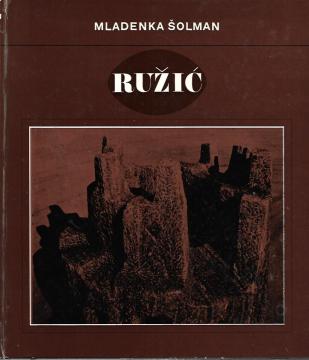
Branko Ružićs Skulptur entstand am Rande der Avantgarde-Begeisterung und entwickelte sich zu einem neuen System gesammelter Form, das von großen Gesten bewacht wird. Der Bildhauer hob die Beschreibbarkeit des Äußeren auf Kosten der Dichte des Inneren auf
Übersetzung
Charlotte Ivir, Khedidja Mahdi-Bolfek
Editor
Željko Grum
Illustrationen
Nino Vranić, L. Beggi, I. Beggi, T. Dabac, K. Schwerdtfeger, W. Tenz
Titelseite
I. Bessi
Maße
24 x 21,5 cm
Seitenzahl
151
Verlag
Grafički zavod Hrvatske (GZH), Zagreb, 1977.
Latein Schrift. Hardcover.
Sprache: Kroatisch.
Angeboten wird ein Exemplar
Zustand:Gebraucht, in gutem Zustand (Gebrauchsspuren)
Interessieren Sie sich für ein anderes Buch? Sie können das Angebot über unsere Suchmaschine suchen und finden oder Bücher nach Kategorien durchsuchen.
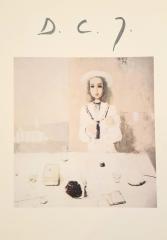
The monograph also provides a biographical framework, an analysis of thematic cycles, an interpretation of the artist's dominant motifs, and numerous reproductions of paintings.
Grafički zavod Hrvatske (GZH), 1989.
Kroatisch. Latein Schrift. Taschenbuch.
12,46 €
Sacred art • Painting • Artistic monograph
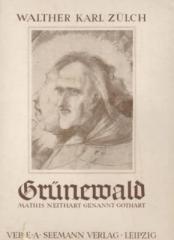
Linen binding, 33 pages, 9 partially folding color plates (altar triptych), 31 black and white photos, sources, color plates, photo reproductions, dust jacket (slight damage), large format 4°.
Seeman Verlag, 1952.
Deutsch. Latein Schrift. Fester Einband mit Schutzumschlag.
As a whole, the book serves as an authoritative interpretation and valorization of the artist's oeuvre, highlighting her uniqueness and contribution to Croatian modern figuration.
Today we classify Josip Franja Muecke in the so-called the Osijek painting circle, a group of portrait and landscape artists who worked in Osijek and Slavonia during the 19th century.