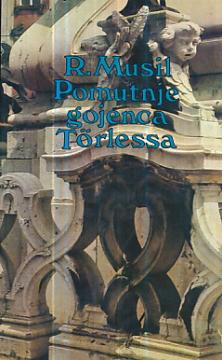
Pomutnje gojenca Törlessa / Tri žene

Pomutnje gojenca Törlessa / Tri žene

Robert Musil

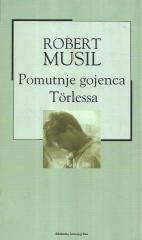
Robert Musil's The Confusions of the Young Törless (1906) and Three Women (1924) are works that explore the psychological depths, moral dilemmas, and internal conflicts of the individual, characteristic of Musil's analytical prose.

The Troubles of the Young Törless, Musil's debut novel, follows the young Robert Törless, a student at a military academy in Austria-Hungary. At the boarding school, Törless witnesses the cruel abuse of his classmate Basin by his friends, Beineberg and Reiting. Rather than resisting, Törless is fascinated by the power dynamics, sadism and moral abyss that lead him into introspection about his own sexuality, identity and the limits of morality. The novel, written in a precise, introspective style, explores themes of adolescence, authority and moral indifference, anticipating Musil's later philosophical depth. Törless eventually leaves school, unable to resolve his inner turmoil, making the work an early example of modernist literature.

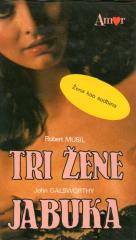
Three Women consists of three novellas – Grigia, The Portuguese Woman and Tonka – that explore relationships between men and women, focusing on emotional and existential complexity. In Grigia, a man escapes to a rural idyll, but his relationship with a peasant woman leads to a tragic outcome. The Portuguese Woman depicts a nobleman whose love for a mysterious woman reveals spiritual depths. Tonka explores the doubt and misunderstanding of a man's relationship with a simple girl. All three stories, written in Musil's lyrical and analytical style, question love, alienation, and the unknowable nature of human relationships.

Both works reflect Musil's ability to combine psychological introspection with philosophical questions, making them key works of modern literature.

Titel des Originals
Die Verwirrungen des jungen Törleß
Übersetzung
Benjamin Tolić
Editor
Milan Mirić
Titelseite
Alfred Pal
Maße
21 x 12,5 cm
Seitenzahl
247
Verlag
Sveučilišna naklada Liber (SNL), Zagreb, 1979.
 
Latein Schrift. Fester Einband mit Schutzumschlag.
Sprache: Kroatisch.

Es werden zwei Exemplare angeboten

Kopiennummer 1

Zustand:Gebraucht, in ausgezeichnetem Zustand
Zum Warenkorb hinzugefügt!

Kopiennummer 2

Zustand:Gebraucht, in ausgezeichnetem Zustand
Reduzierter Preis: 5,424,06
Der Rabatt von 25 % gilt bis zum 11.04.2026 23:59 Uhr
Zum Warenkorb hinzugefügt!
 

Interessieren Sie sich für ein anderes Buch? Sie können das Angebot über unsere Suchmaschine suchen und finden oder Bücher nach Kategorien durchsuchen.

Diese Titel könnten Sie auch interessieren

Pomutnje gojenca Torlessa

Pomutnje gojenca Torlessa

Robert Musil

Robert Musil's 1906 novel, set in an elite military boarding school on the edge of the Austro-Hungarian Empire, is a masterpiece by Musil, inspired by the author's own experiences, that anticipates the rise of fascism, mass psychology, and the crisis of m

Jutarnji list, 2004.
Kroatisch. Latein Schrift. Fester Einband mit Schutzumschlag.
2,99
Tri žene

Tri žene

Robert Musil
Naprijed, 1986.
Kroatisch. Latein Schrift. Fester Einband mit Schutzumschlag.
6,995,24
Pariški maraton : Knjiga pisanja (Pariz21. i 22. oktobar 2023)

Pariški maraton : Knjiga pisanja (Pariz21. i 22. oktobar 2023)

Krajem osamdesetih, Damir Uzunović je otputovao u Pariz i tamo ostao manje od godinu dana. Tada je imao dvadeset godina, a ta epizoda izgnanstva biće formativna za književnost koju će kasnije pisati.

Buybook, 2024.
Kroatisch. Latein Schrift. Hardcover.
12,22
Stotina godina (antikronika)

Stotina godina (antikronika)

Dario Harjaček

Roman „Sto godina“ Darija Harjačeka pruža panoramski pogled na Trešnjevku i njene stanovnike kroz vek promena, ideologija i ljudskih sudbina – mozaik Zagreba u kome se prepliću život, umetnost i istorija.

Oceanmore, 2025.
Kroatisch. Latein Schrift. Taschenbuch.
13,42
Usta puna zemlje

Usta puna zemlje

Branimir Šćepanović

Roman „Usta puna zemlje“ (1970), remek-delo srpskog pisca Branimira Šćepanovića, psihološki je dubinski istraživač granica ljudske duše, samoće i egzistencijalne slobode, podsećajući na Kafku i Kamija.

BIGZ, 1987.
Serbisch. Latein Schrift. Taschenbuch.
3,98
Deobe 1-3

Deobe 1-3

Dobrica Ćosić

Ovo djelo, nagrađeno NIN-ovom nagradom za tu godinu, smatra se jednim od najznačajnijih u srpskoj književnosti nakon Drugog svjetskog rata. Prvo izdanje.

Prosveta, 1961.
Serbisch. Kyrillisch Schrift. Fester Einband mit Schutzumschlag.
Das Buch besteht aus drei Bänden
11,42