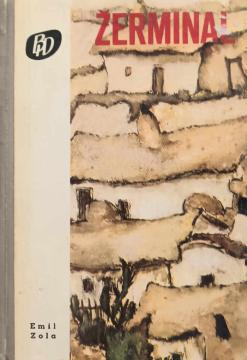

Žerminal

Žerminal

Émile Zola

In his best work, Germinal, Émile Zola realistically described the inhuman living and working conditions of miners in northern France in the 60s of the 19th century.

Germinal is a novel published in 1885, one of the most important in Zola's "Rougon-Macquart" cycle. The main character, Étienne Lantier, a young worker who lost his job due to his impetuous nature, comes to the mining settlement of Montsou and gets a job at the Voreux mine. There, he witnesses the brutal working conditions, injustice, and misery that plague the miners' families. Étienne becomes increasingly politically aware, embraces socialist ideas, and organizes a strike in an effort to get the workers better conditions and wages.

The strike, initially full of hope, soon develops into a struggle for bare survival. The government and the mining employers brutally suppress the rebellion, and the strikers and their families suffer hunger and death. The mine becomes a symbol of the relentless force that grinds the workers down. Despite the defeat, the novel ends with symbolic hope: Germinal - a month in the French revolutionary calendar that marks the awakening of nature - suggests that, like spring, workers' resistance will one day flourish again.

In "Germinal," Zola masterfully combines a naturalistic depiction of misery with strong emotion and social engagement. The work remains one of the most powerful depictions of social injustice in literature.

Original title
Germinal
Translation
Dušan Matić
Editor
Muris Idrizović
Dimensions
20 x 14 cm
Pages
353
Publisher
Svjetlost, Sarajevo, 1973.
 
Latin alphabet. Hardcover.
Language: Croatian.

One copy is available

Condition:Used, excellent condition
Damages or inconvenience notice:
  • Traces of patina
 

Are you interested in another book? You can search the offer using our search engine or browse books by category.

You may also be interested in these titles

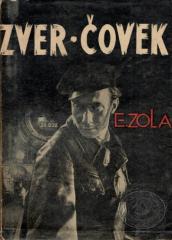
Zver-čovek

Zver-čovek

Émile Zola

Roman istražuje destruktivne sile nasljeđa, strasti i nasilja u modernom industrijskom društvu. Radnja se odvija uglavnom na željeznici, simbolu brzine, sudbine i neizbježne propasti. “Čovjek zvijer” je prvi opis zločina u industrijskom svijetu.

Nolit, 1940.
Serbian. Latin alphabet. Paperback with dust jacket.
56.32
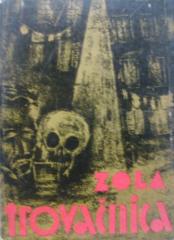
Trovačnica

Trovačnica

Émile Zola

Der Roman Der Giftmischer wurde 1876 in Fortsetzungen und 1877 in Buchform veröffentlicht. Es ist die Geschichte des Kampfes einer Frau um ihr Glück in der Pariser Arbeiterklasse.

Rad, 1955.
Serbian. Latin alphabet. Hardcover with dust jacket.
8.62 - 9.99
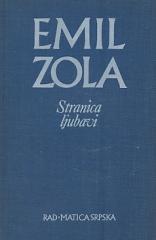
Uspon Rugonovih

Uspon Rugonovih

Émile Zola

The novel deals with the nature and social history of a family during the Second Empire. The main characters are members of the Rugon and Makari families, and the action takes place in France.

Rad, 1974.
Serbian. Latin alphabet. Hardcover.
5.84
Jahači španskih planina

Jahači španskih planina

Zane Grey

In diesem Roman zeichnet Grey ein grandioses Bild der winterlichen Wildnis Colorados und beweist, dass wahre Größe nicht von der Herkunft abhängt. Spannend, romantisch und voller wunderschöner Beschreibungen von Berggipfeln.

Otokar Keršovani, 1963.
Croatian. Latin alphabet. Paperback.
4.36
Pobeda i poraz

Pobeda i poraz

Jara Ribnikar

Dies ist eines ihrer bedeutendsten Werke, das ihr Engagement für soziale Themen und die Entwicklung ihres literarischen Stils widerspiegelt, der sich allmählich von der schematischen Sozialprosa hin zu einer moderneren Erzählstruktur bewegte.

Svjetlost, 1963.
Croatian. Latin alphabet. Paperback.
3.82
Mala božja njiva, Svetiljka za predvečerje

Mala božja njiva, Svetiljka za predvečerje

Erskine Caldwell
Minerva, 1981.
Serbian. Latin alphabet. Hardcover.
4.99