Dnevnici, 1. svezak: 1909-1912.

Dnevnici, 1. svezak: 1909-1912.

Franz Kafka

Kafka's diaries, published posthumously, reveal the inner world of an anxious genius. The first volume covers his early years, when Kafka worked as an insurance clerk in Prague, faced with a dreary life and literary ambitions.

These fragments, written mostly at night, are not diary entries in the classical sense, but a mosaic of thoughts, dreams, sketches and self-criticism – like the diary of a soul on the edge of existence.

1909 begins with descriptions of night walks in Prague, meetings with friends like Max Brod and family dinners. Kafka records the absurdity of everyday life: "Life is only a dream, and a dream is only a dream." He reflects on marriage, sexuality and Jewish identity, with a touch of humor and irony. 1910 goes deep into writing: "What is writing? It is as if one opens and closes oneself." Sketches such as "Description of the Struggle" announce "The Trial" and "The Castle". Dreams of suffocation, persecution and lack of communication reveal a deep loneliness.

1911 brings trips to Paris and Italy, where Kafka describes the Louvre and Venice with a mixture of despair and beauty: "Everything is a lie, only art is true – but even that is false." The meeting with Felice Bauer in 1912 marks a turning point: love letters and diary monologues about the fear of intimacy ("I am nothing, she is everything"). The tyranny of the father is emphasized in fragments that culminate in "Letter to Father" (1919, but the roots are here). Themes: guilt, alienation, the struggle with the body and language.

These diaries are the key to understanding Kafka's world – a labyrinth of fear and creative fire. They are not just intimate snippets, but foreshadowings of modern man: a prisoner of his own head. The volume ends on the threshold of "Doomsday", hinting at the darker note of his later years.

Titel des Originals
Tagebücher
Übersetzung
Nadežda Čačinović
Editor
Dijana Bahtijari
Maße
20,5 x 14 cm
Seitenzahl
230
Verlag
Tim press, Zagreb, 2022.
 
Latein Schrift. Taschenbuch.
Sprache: Kroatisch.

Angeboten wird ein Exemplar

Zustand:Ungebraucht
Zum Warenkorb hinzugefügt!
 

Interessieren Sie sich für ein anderes Buch? Sie können das Angebot über unsere Suchmaschine suchen und finden oder Bücher nach Kategorien durchsuchen.

Diese Titel könnten Sie auch interessieren

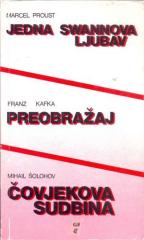
Proces / Preobrazba

Proces / Preobrazba

Franz Kafka

Der Prozess ist ein Roman von Franz Kafka, der zwischen 1914 und 1915 geschrieben und 1925 veröffentlicht wurde. Die Verwandlung ist eine 1915 erstmals veröffentlichte Kurzgeschichte von Franz Kafka und neben den Romanen „Der Prozess“ und „Das Schloss“ si

Europapress holding, 2008.
Kroatisch. Latein Schrift. Hardcover.
5,64
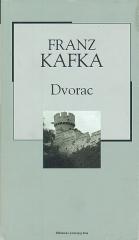
Dvorac

Dvorac

Franz Kafka

The Castle is Franz Kafka's last novel. In it, the protagonist known only as "K." he arrives in the village and struggles to gain access to the mysterious authorities who rule it from a castle supposedly owned by Count Westwest.

Jutarnji list, 2004.
Kroatisch. Latein Schrift. Fester Einband mit Schutzumschlag.
4,993,74 - 5,22
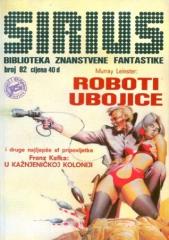
Sirius: Biblioteka znanstvene fantastike - broj 82

Sirius: Biblioteka znanstvene fantastike - broj 82

Murray Leinster, Damir Bajs, Miroslav Bošnjaković, Rastislav Durman, Krunoslav Gernhard, Jakob Z....

Sirius war ein kroatisches Science-Fiction-Magazin. Die Gründung wurde 1976 von Damir Mikuličić vorgeschlagen. In Sirius wurden Werke inländischer Autoren sowie Übersetzungen ausländischer Science-Fiction-Autoren veröffentlicht. Es wurde von 1976 bis 1989

Vjesnik, 1983.
Kroatisch. Latein Schrift. Taschenbuch.
3,46 - 3,48
Dnevnici, 2. svezak: 1912-1914.

Dnevnici, 2. svezak: 1912-1914.

Franz Kafka

Der zweite Band von Kafkas Tagebüchern umfasst die entscheidenden Jahre 1912–1914. Dieser Band bildet eine Brücke zwischen den frühen Skizzen und den reifen Romanen, und die Fragmente sind roh, aphoristisch, voller Selbstverstümmelung, aber auch von genia

Tim press, 2022.
Kroatisch. Latein Schrift. Taschenbuch.
16,34
QB 7

QB 7

Leon Uris

Leon Uris, američki pisac židovskog podrijetla, objavio je 1970. godine roman "QB VII" (Kraljevska klupa, sudnica broj 7), dramatični sudski triler koji istražuje traume Holokausta, krivnju i pravdu, kroz priču o kleveti i prošlosti koja progoni.

August Cesarec, 1985.
Kroatisch. Latein Schrift. Taschenbuch.
3,46