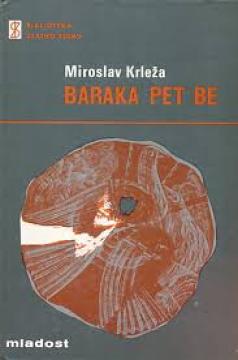
Baraka Pet Be i druge novele
Die Sammlung "Baraka Pet Be i druge novele" enthält eine Auswahl von Krležas Antikriegsromanen aus der Zeit von 1916 bis 1920, die sich mit der Sinnlosigkeit des Ersten Weltkriegs, dem Leid der Heimwehr und dem Untergang Österreich-Ungarns auseinandersetz
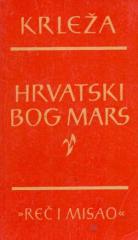
Diese Ausgabe von „Mladost“ (4. Auflage, mit einem Nachwort von Marijan Matković) versammelt einige der eindringlichsten Kurzgeschichten Krležas aus seiner Jugend und seinem frühen Erwachsenenalter, vorwiegend aus dem Zyklus „Der kroatische Gott Mars“ (1922–1947). Das Buch präsentiert eine Auswahl an Antikriegsprosa, die die Schrecken des Krieges, die Klassenheuchlerie, das nationale Chaos und die Entmenschlichung der einfachen Bevölkerung (Bauern, Intellektuelle, Heimwehrangehörige) anprangert, die in ein imperialistisches Schlachthaus geworfen wird.
Die titelgebende Kurzgeschichte „Kaserne Fünf Be“ (1921) – ein Höhepunkt des Expressionismus und Naturalismus – spielt in einem Militärkrankenhaus hinter der galizischen Front in den Jahren 1916/17. In Baracke 5B sterben bewegungsunfähige, verwundete Soldaten verschiedener Nationalitäten (Kroaten, Ungarn, Slowaken, Russen usw.), während Graf Axelrode flieht, zurückkehrt, Gefangene erschießt und eine groteske „Siegesparade“ veranstaltet. Im Mittelpunkt steht der Student Vidović (mit einem Lungenschuss), der in Todesqualen eine Vision des kroatischen Holzchristus auf einem schlammigen Weg hat – ein Symbol einer verlassenen, geschwächten Nation. Der Tod ist nicht heroisch, sondern erbärmlich, inmitten eines Blutstroms und hilfloser Rebellion.
Weitere Kurzgeschichten (Die Schlacht von Bistrica Lesna, Roman der königlich-ungarischen Heimwehr, Drei Heimwehrsoldaten, Heimwehr Jambrek, Der Tod von Franjo Kadaver, Kroatische Rhapsodie) vervollständigen das Bild: von der Ironie des „kroatischen Gottes Mars“ über das Schicksal der Bauern (Jambrek) bis hin zu Massenszenen von Chaos und Tod. Krleža verwendet naturalistische Details (Gestank, Eiter, blutige Verbände), expressionistische Schreie und impressionistische Bilder – alles im Dienste der Antikriegs-, Sozial- und Nationalkritik.
Das Buch ist ein Klassiker und ein Zeugnis von Krležas frühem Stil: bitter, rhetorisch, verdichtet, ohne Illusionen über den „großen“ Krieg. Es ist erschreckend aktuell.
Angeboten wird ein Exemplar
- Eine Nachricht persönlicher Natur