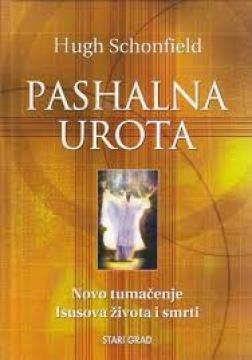
Pashalna urota: Novo tumačenje Isusova života i smrti

Pashalna urota: Novo tumačenje Isusova života i smrti

Hugh J. Schonfield

The author claims that Jesus, aware of the messianic prophecies, carefully planned his life, arrest, crucifixion, and fake death to fulfill the prophecies. The plan failed due to a Roman soldier's spear – Jesus died, and the resurrection was later mytholo

1,998 The Passover Conspiracy: A New Interpretation of the Life and Death of Jesus (1965) by British Jewish biblical scholar Hugh J. Schonfield is one of the most controversial books of the 20th century about the historical Jesus. Selling millions of copies, it caused a storm because it challenged the traditional Christian understanding of Jesus as the divine Son of God and the resurrection as a miracle.

Schonfield portrays Jesus as a deeply devout Jew, an expert in Hebrew prophecies (Isaiah, Psalms, Zechariah), who sincerely believed that he was the Messiah. Instead of waiting for God to intervene, Jesus – according to the author – took his fate into his own hands: he masterfully orchestrated events to fulfill prophecies and awaken faith in the people. The entry into Jerusalem on a donkey, the cleansing of the temple, the Last Supper – all of this was planned out.

The climax is the “Passover conspiracy”: Jesus chose to be crucified the day before Passover (so that the bodies could be removed before the Sabbath), arranged with confidants (perhaps John, Joseph of Arimathea, a secret group) to give him a vinegar sponge laced with a narcotic drug (a mixture of opiates and herbs) on the cross that would slow the heart and induce a death-like state (apparent death). The body would then be quickly removed, placed in a tomb, and revived. The resurrection would then be the “proof” of messiahship.

The plan, however, failed: a Roman soldier pierced his side with a spear (John 19:34), causing his death. After that, his followers, shocked and confused, interpreted the events as a real resurrection, and the story developed into Christianity – especially under the influence of Paul, who added elements of a new religion.

Schonfield does not see Jesus as a fraud, but as a sincere believer who wanted to save the Jewish people from Roman occupation and spiritual ruin – but without miracles, only through human wisdom and sacrifice. The book is a naturalistic and historically informed analysis of the gospels (especially John), with an emphasis on the cultural and political context of the 1st century. Critics accuse it of speculation and blasphemy, but it remains a stimulating discussion of the historical Jesus versus religious myth.

Titel des Originals
The Passover Plot
Übersetzung
Petra Štrok
Editor
Božica Cikuša, Zdravko Cikuša
Titelseite
Zlatko Bilandžija
Maße
20 x 14 cm
Seitenzahl
322
Verlag
Stari grad, Zagreb, 2003.
 
Latein Schrift. Hardcover.
Sprache: Kroatisch.
ISBN
978-9-53671-629-6

Weitere Exemplare sind verfügbar

Kopiennummer 1

Zustand:Neu
Reduzierter Preis: 9,687,74 €
Der Rabatt von 20 % gilt bis zum 31.12.2026 23:59 Uhr
Zum Warenkorb hinzugefügt!

Kopiennummer 2

Zustand:Neu
Reduzierter Preis: 9,647,71 €
Der Rabatt von 20 % gilt bis zum 31.12.2026 23:59 Uhr
Zum Warenkorb hinzugefügt!

Kopiennummer 3

Zustand:Neu
Reduzierter Preis: 9,667,25 €
Der Rabatt von 25 % gilt bis zum 31.12.2026 23:59 Uhr
Zum Warenkorb hinzugefügt!
 

Interessieren Sie sich für ein anderes Buch? Sie können das Angebot über unsere Suchmaschine suchen und finden oder Bücher nach Kategorien durchsuchen.

Diese Titel könnten Sie auch interessieren

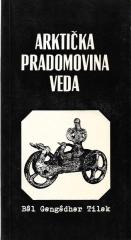
Arktička pradomovina Veda

Arktička pradomovina Veda

Bal Gandahar Tilak

Knjiga „Arktička pradomovina Veda“ (1903) indijskog naučnika Tilaka predložila je hipotezu da su drevni Arijevci, autori Rigvede, poreklom iz arktičkog regiona. Iako kontroverzna, knjiga ostaje važna u proučavanju vedskih tekstova i indijske istorije.

NIRO Književne novine, 1987.
Serbisch. Latein Schrift. Taschenbuch.
17,56 €
Zabranjena religija: zatajene hereze Zapada

Zabranjena religija: zatajene hereze Zapada

J. Douglas Kenyon, Richard Russell Cassaro, David Lewis, Cyntia Logan, Peter Novak, Mark Amaru Pi...

„Zabranjena religija“ je zbirka od 40 eseja poznatih autora alternativne istorije i duhovnosti, koju je sastavio DŽ. Daglas Kenjon. Izuzetno čitljiva, bogato ilustrovana, ostaje jedan od najboljih uvoda u „zabranjenu“ duhovnu istoriju čovečanstva.

Stari grad, 2008.
Kroatisch. Latein Schrift. Hardcover.
18,2412,77 - 18,3213,74 €
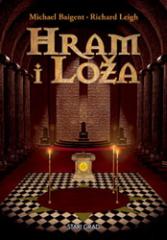
Hram i loža

Hram i loža

Michael Baigent, Richard Leigh

Iako je istoričari smatraju kontroverznom i često kritikuju je kao spekulativnu i bez čvrstih dokaza, knjiga je nezamenljiva i izuzetno uticajna – direktno je inspirisala Braunov „Da Vinčijev kod“ i čitav žanr ezoterične literature.

Stari grad, 2005.
Kroatisch. Latein Schrift. Hardcover.
17,2212,92 - 17,2812,96 €
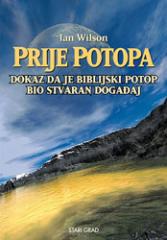
Prije potopa: Dokaz da je biblijski potop bio stvaran događaj

Prije potopa: Dokaz da je biblijski potop bio stvaran događaj

Ian Wilson

Britanski istoričar Ijan Vilson (poznat po svojim knjigama o Torinskom pokrovu i Isusu) nudi najtemeljitiju odbranu teze da je biblijski potop bio stvarni istorijski događaj, a ne samo mit, u svom delu „Pre potopa“.

Stari grad, 2007.
Kroatisch. Latein Schrift. Hardcover.
16,2211,40 - 16,2812,18 €
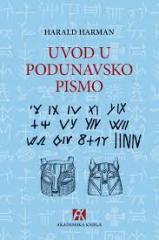
Uvod u podunavsko pismo

Uvod u podunavsko pismo

Harald Haarman

Uvod u podunavsko pismo Haralda Harmana (2010) je prvi sistematski uvod u najstariji sistem pisanja u Evropi – staroevropsko ili podunavsko pismo (oko 5300–3200. p. n. e.), koje je nastalo u okviru podunavske civilizacije.

Akademska knjiga, 2022.
Serbisch. Latein Schrift. Hardcover.
20,00 €