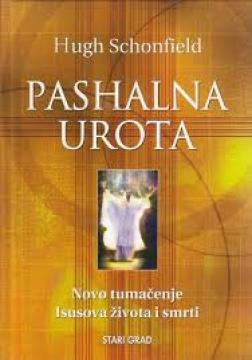
Pashalna urota: Novo tumačenje Isusova života i smrti

Pashalna urota: Novo tumačenje Isusova života i smrti

Hugh J. Schonfield

The author claims that Jesus, aware of the messianic prophecies, carefully planned his life, arrest, crucifixion, and fake death to fulfill the prophecies. The plan failed due to a Roman soldier's spear – Jesus died, and the resurrection was later mytholo

1,998 The Passover Conspiracy: A New Interpretation of the Life and Death of Jesus (1965) by British Jewish biblical scholar Hugh J. Schonfield is one of the most controversial books of the 20th century about the historical Jesus. Selling millions of copies, it caused a storm because it challenged the traditional Christian understanding of Jesus as the divine Son of God and the resurrection as a miracle.

Schonfield portrays Jesus as a deeply devout Jew, an expert in Hebrew prophecies (Isaiah, Psalms, Zechariah), who sincerely believed that he was the Messiah. Instead of waiting for God to intervene, Jesus – according to the author – took his fate into his own hands: he masterfully orchestrated events to fulfill prophecies and awaken faith in the people. The entry into Jerusalem on a donkey, the cleansing of the temple, the Last Supper – all of this was planned out.

The climax is the “Passover conspiracy”: Jesus chose to be crucified the day before Passover (so that the bodies could be removed before the Sabbath), arranged with confidants (perhaps John, Joseph of Arimathea, a secret group) to give him a vinegar sponge laced with a narcotic drug (a mixture of opiates and herbs) on the cross that would slow the heart and induce a death-like state (apparent death). The body would then be quickly removed, placed in a tomb, and revived. The resurrection would then be the “proof” of messiahship.

The plan, however, failed: a Roman soldier pierced his side with a spear (John 19:34), causing his death. After that, his followers, shocked and confused, interpreted the events as a real resurrection, and the story developed into Christianity – especially under the influence of Paul, who added elements of a new religion.

Schonfield does not see Jesus as a fraud, but as a sincere believer who wanted to save the Jewish people from Roman occupation and spiritual ruin – but without miracles, only through human wisdom and sacrifice. The book is a naturalistic and historically informed analysis of the gospels (especially John), with an emphasis on the cultural and political context of the 1st century. Critics accuse it of speculation and blasphemy, but it remains a stimulating discussion of the historical Jesus versus religious myth.

Original title
The Passover Plot
Translation
Petra Štrok
Editor
Božica Cikuša, Zdravko Cikuša
Graphics design
Zlatko Bilandžija
Dimensions
20 x 14 cm
Pages
322
Publisher
Stari grad, Zagreb, 2003.
 
Latin alphabet. Hardcover.
Language: Croatian.
ISBN
978-9-53671-629-6

Multiple copies are available

Copy number 1

Condition:New
Discounted price: 9.687.74
20% discount is valid until 12/31/26 11:59 pm

Copy number 2

Condition:New
Discounted price: 9.647.71
20% discount is valid until 12/31/26 11:59 pm

Copy number 3

Condition:New
Discounted price: 9.667.25
25% discount is valid until 12/31/26 11:59 pm

Copy number 4

Condition:New
Discounted price: 9.626.73
30% discount is valid until 12/31/26 11:59 pm
 

Are you interested in another book? You can search the offer using our search engine or browse books by category.

You may also be interested in these titles

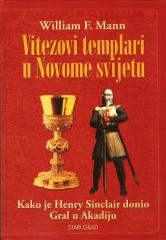
Vitezovi Templari u Novome svijetu: Kako je Henry Sinclair donio Gral u Akadiju

Vitezovi Templari u Novome svijetu: Kako je Henry Sinclair donio Gral u Akadiju

William F. Mann

Almost a hundred years before Columbus discovered the New World, Scottish Prince Henry Sinclair sailed to what is now Nova Scotia. It was this same Prince Henry Sinclair who offered refuge to the Knights Templar, who were fleeing persecution by the French

Stari grad, 2004.
Croatian. Latin alphabet. Hardcover.
15.2410.67 - 15.2810.70
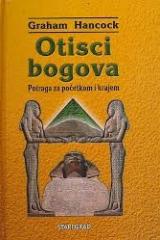
Otisci bogova: Potraga za početkom i krajem

Otisci bogova: Potraga za početkom i krajem

Graham Hancock

Hancock's evidence reveals not only the clear footprints of an unknown civilization that flourished during the last ice age, but also the terrifying truth about the scale of the catastrophe that wiped out almost all traces of it.

Stari grad, 2002.
Croatian. Latin alphabet. Hardcover.
19.2213.45 - 19.3615.49
Prije faraona: Tajanstvena pretpovijest Egipta

Prije faraona: Tajanstvena pretpovijest Egipta

Edward F. Malkowski

American researcher Edward Malkowski claims in his book Before the Pharaohs that Egyptian civilization is the successor to a much older, more technologically advanced culture that existed at least 10–12 thousand years before the dynastic period.

Stari grad, 2006.
Croatian. Latin alphabet. Hardcover.
16.2812.21 - 16.3212.24
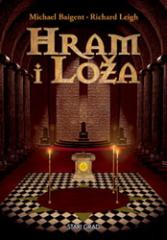
Hram i loža

Hram i loža

Michael Baigent, Richard Leigh

Although considered controversial by historians and often criticized as speculative and lacking solid evidence, the book is indispensable and extremely influential – it directly inspired Dan Brown's "The Da Vinci Code" and the entire genre of esoteric lit

Stari grad, 2005.
Croatian. Latin alphabet. Hardcover.
17.2212.92 - 17.2812.96
Talisman: sveti gradovi, tajna vjera

Talisman: sveti gradovi, tajna vjera

Graham Hancock, Robert Bauval

Talisman is an exciting intellectual journey through the hidden streets and underground canals of history in search of traces of the secret religion that shaped the world, hidden in architecture and monuments.

Stari grad, 2006.
Croatian. Latin alphabet. Hardcover.
24.4217.09 - 24.4617.12