Žetva
Ein rares Buch
Antiquität

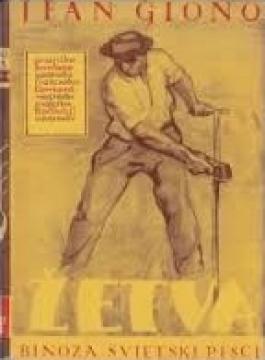
Žetva

Jean Giono

In the abandoned Provençal village of Aubignane lives the recluse Panturle. The arrival of young Arsula changes his life and gradually brings life back to the village that was doomed to disappear. With a foreword by Josip Bogner.

The novel The Harvest was published in 1930 as the final part of Gion's "Pan Trilogy". The plot is set in the remote Provençal village of Aubignane, which is dying out. The former community has almost disappeared; only the old people and the recluse Panturle remain. The village gradually becomes a symbol of a world that is losing its vitality and connection with nature.

The main character, Panturle, is a strong but lonely man. He lives almost like a savage, without a clear goal or hope. The turning point comes when he meets Arsule, a young woman who travels with the knife sharpener Gédémus. After a series of events, Arsule stays by Panturle's side. Their love is not portrayed romantically and sentimentally, but as a life force that awakens the dormant possibilities of man. Thanks to Arsule, Panturle begins to cultivate the land again, sow grain and create a home. The renewal of their relationship becomes the renewal of the entire village.

The philosophical dimension of the novel is found in the idea of ​​regain – second growth, re-sprouting after the harvest. This concept signifies the possibility of a new beginning after decay. Giono does not view nature as a backdrop, but as a living force with which man must establish harmony. Nature possesses an almost mythical presence; the wind, the earth and the seasons act as active participants in the plot. Man does not dominate nature, but cooperates with it.

The novel is therefore not just a story about the village but also about the resurrection of the human spirit. Love, work and connection with the land enable life to triumph over loneliness, infertility and death. The ending, which announces a new harvest and a new child, symbolises the triumph of creative energy and the future. It is precisely because of this universal message that Harvest is considered one of Giono's most important works.

Titel des Originals
Regain
Übersetzung
Josip Bogner
Illustrationen
Zdenka Turkalj
Maße
19,5 x 14,5 cm
Seitenzahl
159
Verlag
Naklada Binoza, Zagreb, 1935.
 
Latein Schrift. Fester Einband mit Schutzumschlag.
Sprache: Kroatisch.

Es werden zwei Exemplare angeboten

Kopiennummer 1

Zustand:Gebraucht, in sehr gutem Zustand
Nachteile/Unannehmlichkeiten:
  • The cover is missing
Zum Warenkorb hinzugefügt!

Kopiennummer 2

Zustand:Gebraucht, in gutem Zustand (Gebrauchsspuren)
Nachteile/Unannehmlichkeiten:
  • Abgenutzte Bezüge
  • Die Abdeckung fehlt
Zum Warenkorb hinzugefügt!
 

Interessieren Sie sich für ein anderes Buch? Sie können das Angebot über unsere Suchmaschine suchen und finden oder Bücher nach Kategorien durchsuchen.

Diese Titel könnten Sie auch interessieren

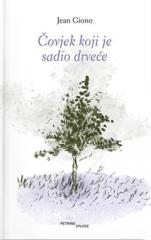
Čovjek koji je sadio drveće

Čovjek koji je sadio drveće

Jean Giono
Petrine knjige, 2022.
Kroatisch. Latein Schrift. Taschenbuch.
14,32 €
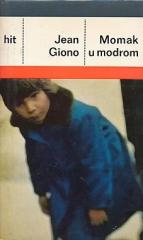
Momak u modrom

Momak u modrom

Jean Giono

„Der Junge in Blau“ ist ein autobiografischer Roman von Jean Gion über seine Kindheit in der Provence. Anhand von Erinnerungen an Familie, erste Freunde und die Natur schildert der Autor das Heranwachsen und die Entwicklung des späteren Schriftstellers.

Znanje, 1982.
Kroatisch. Latein Schrift. Fester Einband mit Schutzumschlag.
6,74 €
Zmijska kuća

Zmijska kuća

Miriam Delly

In „Das Haus der Schlange“ verwebt M. Delly eine Liebesgeschichte mit einem spannenden Kriminalroman über Erbschaft, Verrat und Erlösung. In einem düsteren Schloss voller Intrigen erkennen die Helden, dass nur Glaube und reine Liebe das Böse besiegen könn

Nakladni zavod Matice hrvatske, 1989.
Kroatisch. Latein Schrift. Fester Einband mit Schutzumschlag.
6,78 €
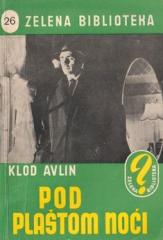
Pod plaštom noći

Pod plaštom noći

Claude Aveline

Diese Sammlung ist perfekt für Fans psychologischer Krimis wie Agatha Christie oder Simenon, aber mit einem Hauch französischer Poesie.

Kosmos, 1958.
Serbisch. Latein Schrift. Taschenbuch.
2,12 - 2,14 €
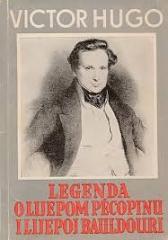
Legenda o lijepom Pécopinu i lijepoj Bauldouri

Legenda o lijepom Pécopinu i lijepoj Bauldouri

Hugo
Victor Hugo

Eine romantische Erzählung von Victor Hugo, der 21. Brief aus seinem Reisebericht „Le Rhin“ („Der Rhein“, 1842). Ein romantischer Klassiker, ähnlich den Märchen der Brüder Grimm oder Andersen, jedoch geprägt von Hugos tiefer Emotionalität und seiner Philo

Zora, 1951.
Kroatisch. Latein Schrift. Taschenbuch.
3,34 €
Veliki Meaulnes

Veliki Meaulnes

Alain-Fournier

Meaulnes verkörpert das romantische Ideal, die Suche nach einer unerreichbaren und geheimnisvollen Welt zwischen Kindheit und Erwachsenenalter.

Znanje, 1989.
Kroatisch. Latein Schrift. Taschenbuch.
3,48 €