Žetva
Antique
Rare book

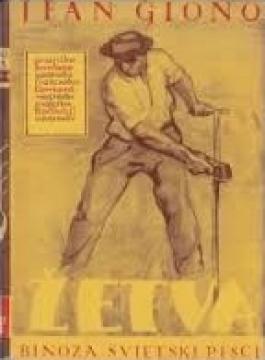
Žetva

Jean Giono

In the abandoned Provençal village of Aubignane lives the recluse Panturle. The arrival of young Arsula changes his life and gradually brings life back to the village that was doomed to disappear. With a foreword by Josip Bogner.

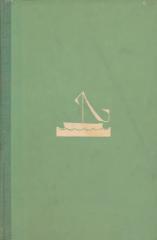
The novel The Harvest was published in 1930 as the final part of Gion's "Pan Trilogy". The plot is set in the remote Provençal village of Aubignane, which is dying out. The former community has almost disappeared; only the old people and the recluse Panturle remain. The village gradually becomes a symbol of a world that is losing its vitality and connection with nature.

The main character, Panturle, is a strong but lonely man. He lives almost like a savage, without a clear goal or hope. The turning point comes when he meets Arsule, a young woman who travels with the knife sharpener Gédémus. After a series of events, Arsule stays by Panturle's side. Their love is not portrayed romantically and sentimentally, but as a life force that awakens the dormant possibilities of man. Thanks to Arsule, Panturle begins to cultivate the land again, sow grain and create a home. The renewal of their relationship becomes the renewal of the entire village.

The philosophical dimension of the novel is found in the idea of ​​regainsecond growth, re-sprouting after the harvest. This concept signifies the possibility of a new beginning after decay. Giono does not view nature as a backdrop, but as a living force with which man must establish harmony. Nature possesses an almost mythical presence; the wind, the earth and the seasons act as active participants in the plot. Man does not dominate nature, but cooperates with it.

The novel is therefore not just a story about the village but also about the resurrection of the human spirit. Love, work and connection with the land enable life to triumph over loneliness, infertility and death. The ending, which announces a new harvest and a new child, symbolises the triumph of creative energy and the future. It is precisely because of this universal message that Harvest is considered one of Giono's most important works.

Original title
Regain
Translation
Josip Bogner
Illustrations
Zdenka Turkalj
Dimensions
19.5 x 14.5 cm
Pages
159
Publisher
Naklada Binoza, Zagreb, 1935.
 
Latin alphabet. Hardcover with dust jacket.
Language: Croatian.

Two copies are available

Copy number 1

Condition:Used, very good condition
Damages or inconvenience notice:
  • The cover is missing

Copy number 2

Condition:Used, good condition (visible signs of use)
Damages or inconvenience notice:
  • Worn covers
  • The cover is missing
 

Are you interested in another book? You can search the offer using our search engine or browse books by category.

You may also be interested in these titles

Čovjek koji je sadio drveće

Čovjek koji je sadio drveće

Jean Giono
Petrine knjige, 2022.
Croatian. Latin alphabet. Paperback.
14.32
Ljubavnici sa Tahoa

Ljubavnici sa Tahoa

Joseph Kessel

The plot is set in Lisbon, along the Tagus River, and follows an emotional and complex love story intertwined with dramatic elements.

Minerva, 1987.
Serbian. Latin alphabet. Hardcover.
4.98
Bartolomejska noć: knjiga 1-2

Bartolomejska noć: knjiga 1-2

Alexandre Dumas

This book focuses on one of the bloodiest events in French history – St. Bartholomew's Day in 1572, when thousands of French Protestants were massacred in Paris and across the country.

Epoha, 1966.
Croatian. Latin alphabet. Hardcover with dust jacket.
The book consists of two volumes
9.36
Pet komedija: priče iz Molierea

Pet komedija: priče iz Molierea

Jeanne Ch. Normand, Andree Mars

This book includes the most important works of Moliere (The Doctor Against His Will, Tartuffe, The Miser, The Presumptuous Patient, The Citizen-Noble) which Professor Jeanne Normand, in collaboration with Andree Mars, has covered in a book for young peopl

SKD Prosvjeta, 1989.
Croatian. Latin alphabet. Hardcover.
5.384.30
Gospođica Chambon

Gospođica Chambon

Éric Holder

Miss Chambon is the story of the meeting of Antonio, a Portuguese mason, and Véronique Chambon, his son's teacher. Antonio and Véronique love and want each other, but in silence and in their thoughts. They see each other, talk, but do not mention the feel

V.B.Z, 2004.
Croatian. Latin alphabet. Hardcover.
4.26
Julija 1-3

Julija 1-3

Gérard Néry

The novel's plot is set within the framework of historical events of the second half of the 19th century, intertwined with a love story and adventures of the young, underage, and madly in love Juliet, who nevertheless experiences her passions in a mature

Otokar Keršovani, 1973.
Croatian. Latin alphabet. Hardcover with dust jacket.
The book consists of 3 volumes
14.56