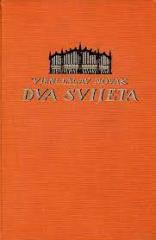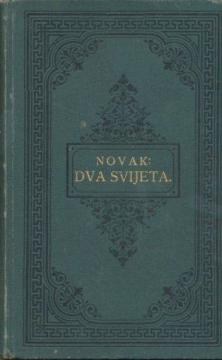
Dva svijeta
Ein psychologischer Roman über den Musiker Amadej Zlatanić, der nach seinem Studium in Prag nach Kroatien zurückkehrt, wo er mit dem Unverständnis seiner kleinbürgerlichen Umgebung konfrontiert wird und schließlich in einer Irrenanstalt landet.
Die Hauptfigur ist Amadej Zlatanić, ein talentierter Musiker und Komponist. Nach einem erfolgreichen Studium am Prager Konservatorium, geprägt von künstlerischen Idealen und europäischen Musikeinflüssen, kehrt er in seine kroatische Heimat zurück. Statt des erwarteten Verständnisses und der Möglichkeiten zur kreativen Entfaltung trifft er auf ein provinzielles, kleinbürgerliches Umfeld*, gesellschaftliche Konventionen, materielle Sorgen und ein völliges Unverständnis seiner Umgebung.
Der Roman schildert meisterhaft den Zusammenprall zweier Welten: die innere, ideale Welt der Kunst, der Musik und der schöpferischen Freiheit versus die äußere, raue, utilitaristische und kulturell rückständige Welt des österreichisch-ungarischen Kroatiens zu Beginn des 20. Jahrhunderts. Novak, selbst Musikpädagoge, nutzt die Musik als zentrales Motiv und Metasprache – Beschreibungen von Kompositionen, Orgelimprovisationen und Amadejs innere musikalischen Erfahrungen dringen in poetische und symbolische Ebenen vor und zeigen den kreativen Prozess und den spirituellen Zerfall des Protagonisten.
Nach und nach zerbricht Amadeus' künstlerische Integrität unter dem Druck gesellschaftlicher Normen, finanzieller Probleme, Einsamkeit und mangelnder kultureller Anregung. Der Roman gipfelt in seinem psychischen Zusammenbruch und seiner Einweisung in eine Irrenanstalt – ein klassisches Motiv vom Niedergang eines sensiblen Intellektuellen in einem feindseligen Umfeld.
Das Werk betont die Themen der Einsamkeit des Künstlers, kultureller Rückständigkeit, des Konflikts zwischen Individuum und Gesellschaft sowie der Dualität von Schein und Sein. Novak verbindet gekonnt realistische Gesellschaftsanalyse mit tiefgründiger psychologischer Introspektion und nutzt die Erfahrungen des Musikers für facettenreiche musikalische Beschreibungen.
Angeboten wird ein Exemplar