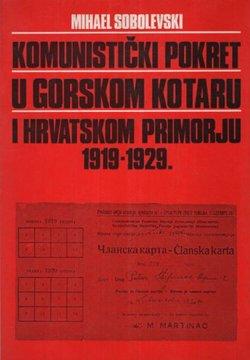
Komunistički pokret u Gorskom kotaru i Hrvatskom Primorju 1919.-1929.
A regional study of the communist movement in Gorski Kotar and the Croatian Littoral, 1919–1929, set against labour organising and political conflict.
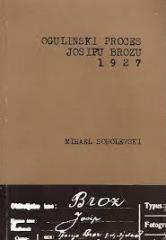
Mihael Sobolevski’s Komunistički pokret u Gorskom kotaru i Hrvatskom primorju 1919.–1929. examines the regional history of communist and labour organising during the decade following the First World War. Its geographical focus offers a way to approach broader historical developments through local circumstances and regional differences.
The period encompasses the establishment of a new state, social tensions, the growth of the communist movement and the prohibition of its legal activities. This context raises questions about political mobilisation, connections with workers and the adaptation of organisational activity to state surveillance and repression.
Gorski Kotar and the Croatian Littoral are situated within a wider political history, while retaining their distinctive local relationships and initiatives. The regional perspective helps readers consider how political ideas take shape in particular communities and how local events contribute to national developments.
The study will interest researchers of the interwar period, history students and readers concerned with the past of these Croatian regions. It also provides an example of communist-movement historiography published in the 1980s, suitable for reading alongside more recent research and interpretations.
One copy is available